Water heater installation
Water Heater Installation in Lake Oswego
4.9 ★ on Google (16 reviews)Open 7 AM to 11 PM, 7 days
Repair or Full Installation: How to Tell Which One You Need
If the tank itself is sound and only a part has failed, a repair is usually the smarter move. If the tank is leaking from its body, the water comes out rusty, or the unit keeps breaking, replacement tends to make more sense. When it's a close call, ask for both options and a clear reason behind each one.
Not every water heater problem means you need a new one. A water heater is mostly a tank plus a few parts that wear out. Those parts can often be swapped. The tank can't. So the real question is simple: is the problem in a part, or in the tank?
A repair is often enough when:
- An electric heater has no hot water or runs out fast. A bad heating element or thermostat is a common cause, and both can be replaced.
- A gas heater won't stay lit. That often points to the pilot assembly or a sensor part, not the whole unit.
- Water is dripping from the drain valve or a pipe fitting on top. Leaks at connections can usually be fixed without touching the tank.
- The water is lukewarm after a breaker trip or a thermostat that got bumped. Check your breaker panel first. It costs nothing.
If any of these sound like your situation, our water heater repair service may be all you need, and it has its own page with more detail.
Full replacement tends to make more sense when:
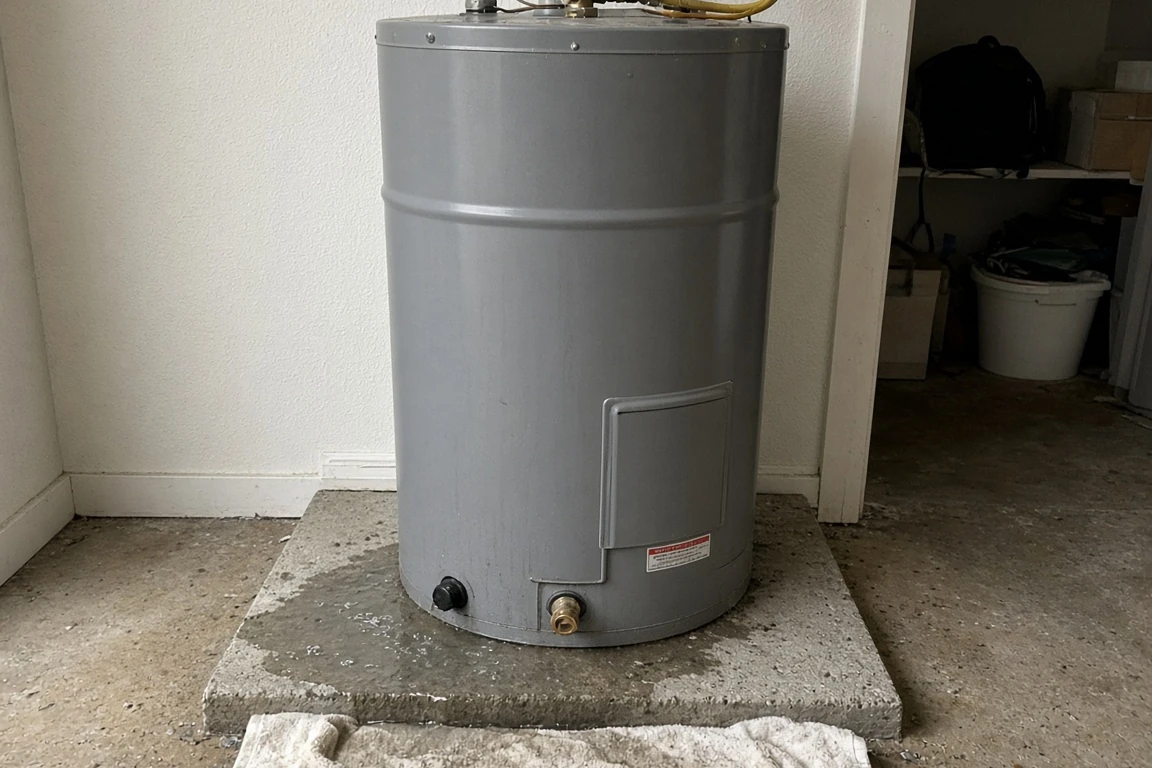
- Water is pooling under the tank and it's coming from the tank body itself. Once the inner tank rusts through, it can't be patched.
- Your hot water comes out rusty or brown, but the cold water is clear. That can mean the inside of the tank is corroding.
- The heater pops, rumbles, or bangs, and a flush hasn't fixed it. Heavy buildup in an older tank can be hard to clear.
- You've paid for several repairs in a short time. At some point, fixing the old unit costs more than it saves.
- The unit is old. Look for the date on the label on the side of the tank. An older tank with a new problem is a good time to weigh replacement before it fails on its own.
Some cases are a gray area. Say your tank is fairly old, but the only problem is a worn thermostat. A repair will get you hot water today. But you may be back in the same spot soon with a bigger bill. The honest answer depends on the tank's condition, how much hot water your household uses, and whether the current unit still fits your needs.
That's why it helps to ask a few questions before you agree to anything:
- What exactly failed, and how do you know?
- Can this part be repaired, and what would that cost compared with a new unit?
- Is the tank itself in good shape?
- If I repair it now, what should I watch for next?
You should get a plain answer to each one. If a plumber jumps straight to replacement without showing you why the tank is the problem, it's fair to ask for more detail or a second look.
And if your water heater works fine and you're just wondering whether it's time, there's no rush. A working tank with no leaks, no rust, and steady hot water doesn't need to be replaced yet. Keep an eye on the base of the tank and the color of your hot water, and plan ahead instead of waiting for it to fail.
Oregon Licensing and Permit Rules That Apply to This Job
A new water heater isn't just a box you swap out. It connects to your water supply and often to a gas line and a vent. It also sits under pressure. That's why Oregon treats it as real plumbing work, with rules about who can do it and how it gets checked. Knowing the basics helps you spot a shortcut before it costs you.
Start with the contractor's license. Any business you pay to do construction or plumbing work on your home in Oregon should be registered with the Oregon Construction Contractors Board, known as the CCB. Our CCB license number is 257405. You can look up any contractor's number on the CCB's public website and see whether the license is active. It takes a minute, and it's worth doing for anyone you're thinking of hiring, including us.
A CCB license covers the business. The person doing the hands-on plumbing should also hold the right Oregon plumbing license. It's fair to ask both questions: "Are you registered with the CCB?" and "Who will be doing the work, and are they licensed for it?"
Next is the permit. Replacing a water heater usually calls for a permit from your local building department. After the work is done, an inspector comes out to look it over. Some homeowners see the permit as red tape. It's really a second set of eyes on a job that involves hot water, pressure, and sometimes gas. A permit also creates a record, which can help when you sell your home or file an insurance claim.
Here are the things an inspector commonly looks at on a water heater job:
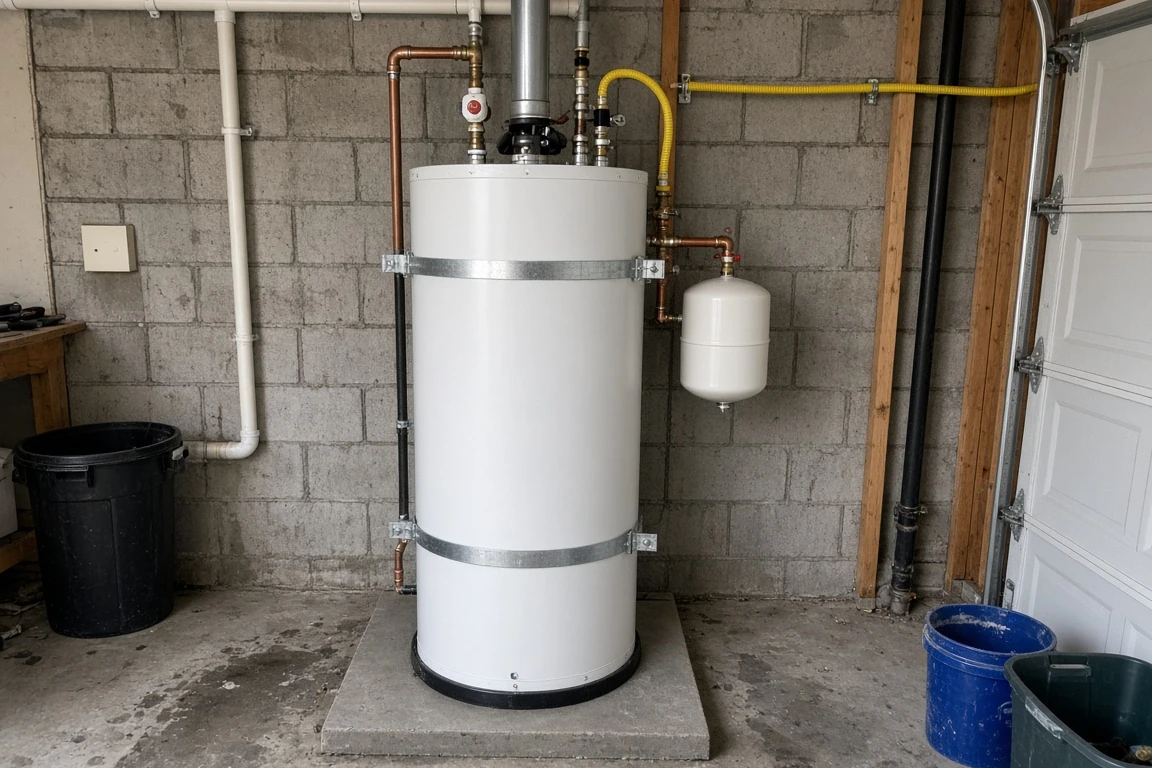
- Earthquake strapping. Oregon is earthquake country, and a tank that tips over can break water and gas lines. Straps hold it in place.
- The temperature and pressure relief valve. This safety valve lets out water if the tank gets too hot or too pressurized. Its discharge pipe has to run to a safe spot.
- Venting on gas units. Exhaust has to leave your home the right way so fumes don't build up inside.
- Gas connections. Fittings and the shutoff valve need to be correct and leak free.
- Expansion control. Some homes need an expansion tank to handle pressure as water heats up.
The exact rules can change and can depend on your home and the type of heater, so ask your installer what the inspection will cover for your setup.
If a gas line has to be moved or added, for example when you switch from electric to gas, that's its own piece of work. Our gas line installation service has its own page.
Before you agree to a quote, ask whether the permit is included, who schedules the inspection, and what happens if the inspector asks for a change. A clear answer to all three tells you a lot about how the rest of the job will go.
Tank vs. Tankless: Deciding What to Install
Once you know you need a new water heater, the next question is usually whether to stay with a tank or switch to tankless. Neither one is the better choice for every home. The right pick depends on how your household uses hot water and what your home can support without a lot of extra work.
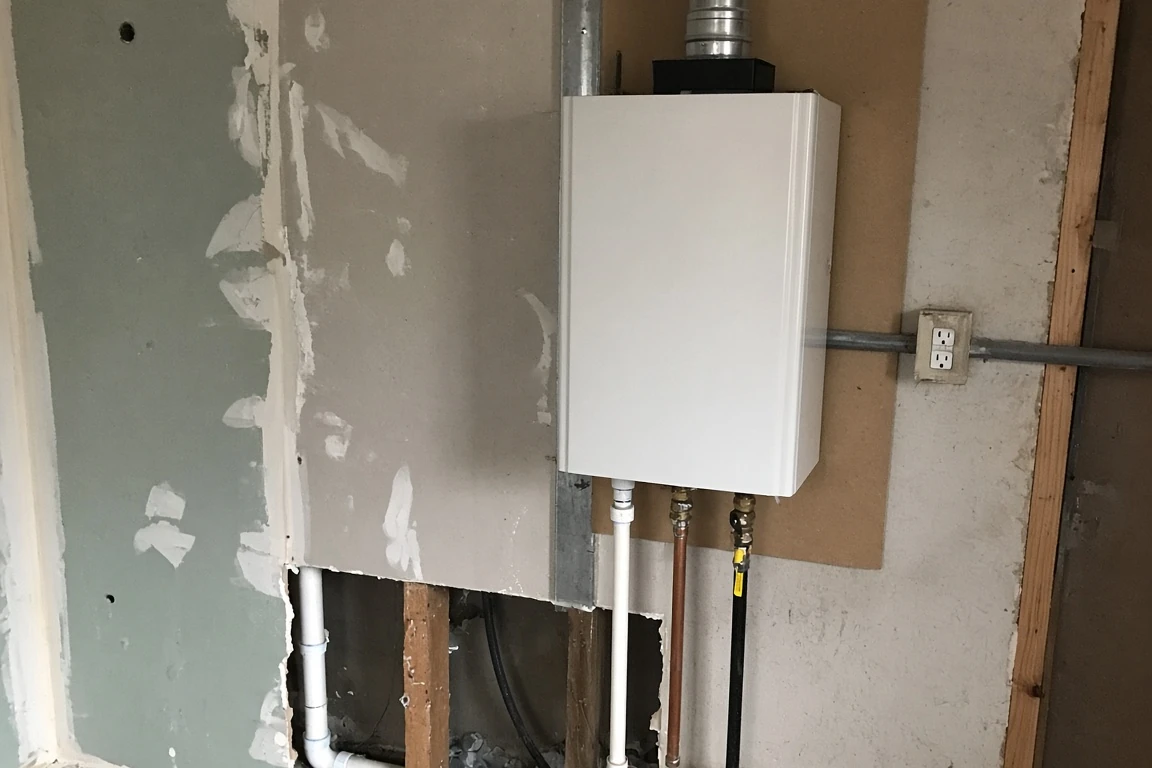
A tank heater keeps a set amount of water hot and ready. When that supply runs low, you wait while it heats back up. A tankless heater warms water only as it flows through, so it won't run out the way a tank does. But it can only heat so much water at once. If two showers and the dishwasher all run together, a unit that's too small can't keep up, and someone gets a lukewarm shower.
Incoming water temperature matters too. In the colder months, the water coming into your home is colder, so a tankless unit has to work harder to bring it up to temperature. That's why it has to be sized for your home's busiest hour on a cold morning, not for an average day.
A tank often fits best when:
- Your current setup works well and you just want a straight swap with fewer changes.
- You want the lower upfront cost. A like-for-like tank replacement usually involves less new work.
- Your gas line, venting, or electrical service would need big upgrades to support tankless.
Tankless tends to fit better when:
- Your household keeps running out of hot water with a tank.
- You need the floor space. Tankless units mount on a wall.
- You plan to stay in the home long enough for the lower standby energy loss to matter to you.
The cost difference usually isn't just the price of the unit. Switching to tankless can mean a larger gas line, new venting, or more electrical capacity for an electric model. Those changes can add up, and any gas line changes are their own piece of work, as noted earlier. A tank swap in the same spot, with the same fuel and venting, tends to be simpler. That's why two quotes for "a new water heater" can look very different.
Upkeep is different too. Tank heaters do best with a periodic flush to clear sediment. Tankless units need periodic descaling, and how often depends on your water. Neither one is maintenance free.
Before you choose, it helps to ask your installer a few direct questions:
- Can my current gas line, vent, or electrical panel handle a tankless unit, or will it need upgrades?
- What size unit does my household need at peak use?
- What's included in each quote, and what's not?
- What upkeep will each option need from me?
If a tank is working well for your family and your only problem is an old unit, replacing it with another tank is a perfectly sound choice. If you're leaning toward tankless, our tankless water heater installation page covers that option in more detail. Either way, the goal is a heater sized and fitted for your home, so you get steady hot water without paying for changes you don't need.
What Drives the Cost of a Water Heater Installation
The heater itself is only part of the bill. Most of what moves the price up or down is the work around it: getting the old unit out, fitting the new one into your space, and bringing the setup up to current code. That's why we'd rather look at your setup before giving you a number than guess over the phone.
These are the main things that shape the cost:
- The type and size of heater. A larger tank or a higher-output unit costs more. Gas and electric models also differ in price and in the work needed to hook them up.
- Like-for-like or a change. Putting the same type of heater in the same spot is the simplest job. Switching fuel, moving the heater, or going tankless adds work, as covered above.
- Where the heater sits. A heater in an open garage is easier to reach than one in a tight closet, an attic, or a crawlspace. Stairs, narrow doorways, and cramped spaces add time.
- Code updates. If your old install is missing earthquake straps, a proper relief valve drain line, or an expansion tank, those may need to be added now so the job can pass inspection.
- The condition of nearby parts. Old shutoff valves, corroded fittings, or worn water and gas connectors are often replaced while the heater is out. It's cheaper to do it then than to come back later.
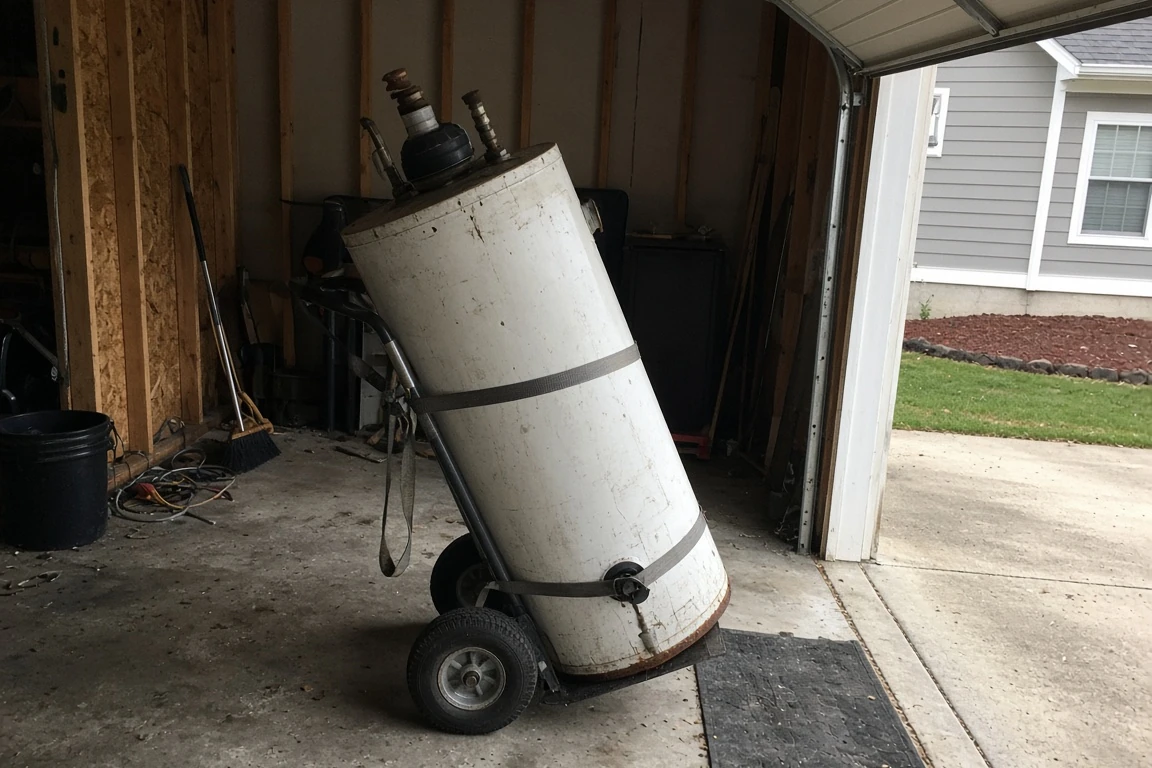
- Removing the old unit. A full tank is heavy. Draining it, carrying it out, and disposing of it is real labor, and some quotes include it while others don't.
- The permit. The fee and the inspection visit are part of a proper install. Make sure you know whether a quote includes them.
Timing can matter too. When a tank fails and floods a room, you need help fast. A planned replacement on an old but working tank gives you time to compare options and choose a unit without pressure.
Quotes in this trade usually come in one of two forms. A flat-rate quote gives you one price for a defined scope of work. A time-and-materials quote bills for hours worked plus parts. Either can be fair. What matters is that you know which one you're getting and what would change the final number.
This is also why two quotes for the same heater can look far apart. One might include the permit, haul-away, new valves, and code updates. The other might list only the unit and basic labor, with extras added later. Before you compare, line them up item by item.
Ask these questions before you say yes:
- What exactly is included, and what isn't?
- Is the permit fee and inspection part of this price?
- Does the price cover removing and disposing of the old heater?
- What code updates does my current setup need?
- If you find a problem once the old unit is out, how will you tell me and get my approval before doing more?
That last question matters most. Surprises happen when a hidden problem gets fixed and billed without a conversation first. One of our reviewers put it this way:
They explain the problem and the cost before starting, with no surprise charges on the final bill.
That's one customer's experience, not a promise about every job. It still describes the standard you should expect from any installer in Lake Oswego. You should get a clear scope, a plain explanation of anything extra, and your approval before the price changes.
What Happens During a Water Heater Installation
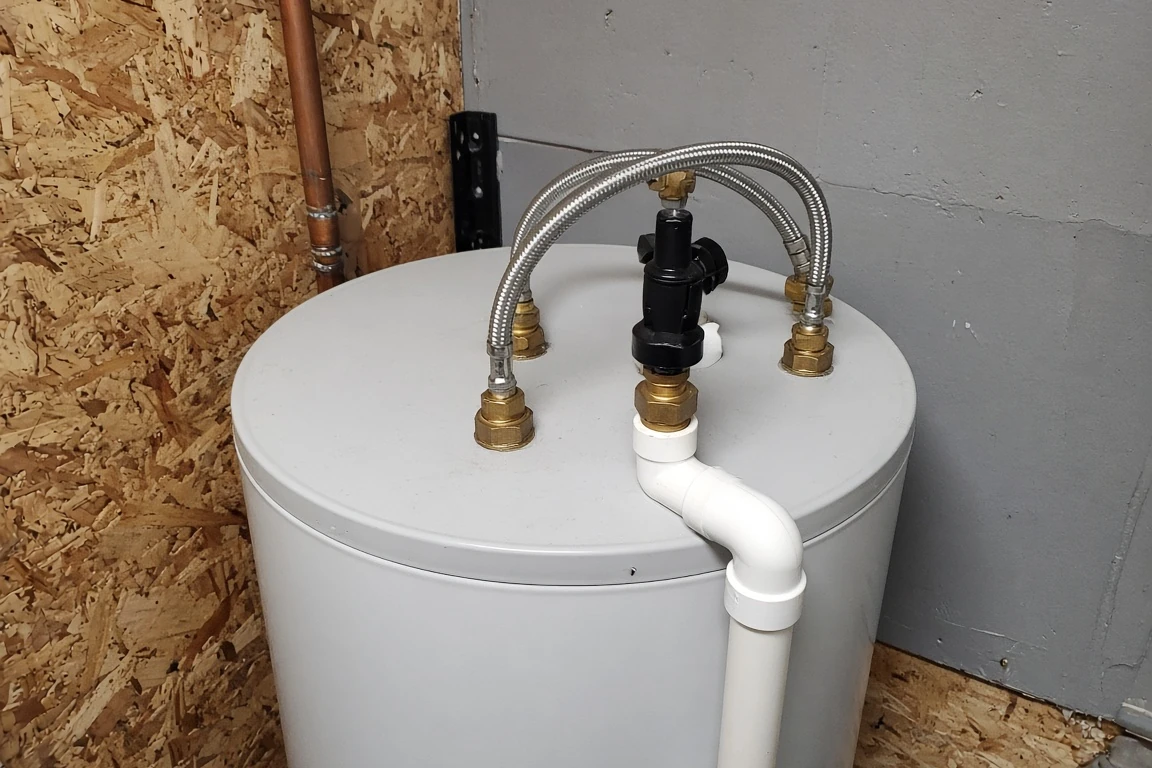
Knowing what install day looks like takes a lot of the stress out of it. A proper installation follows a clear order: shut things off, take the old unit out, set the new one, connect it, then test it before anyone leaves. Here's what each step involves and where you fit in.
Before the installer arrives, clear a path from the door to the heater. Move boxes, bikes, or stored items out of the way, and make some room around the tank itself. If you're not sure where your main water shutoff or gas valve is, now's a good time to find out. It's handy to know in any plumbing emergency, not just this one.
On the day, the work usually goes like this:
- Shut off and drain. The water supply, the gas or the power, and the old tank all get turned off. Then the tank is drained. A full tank holds a lot of water and is far too heavy to move until it's empty.
- Disconnect and remove. The water lines, gas or electrical connection, and vent come off, and the old unit is carried out. If haul away is part of your quote, it leaves with the installer.
- Set the new heater. The new unit goes in place, level and secure, with the earthquake straps and other safety parts covered earlier.
- Make the connections. Water lines, the relief valve drain line, and the gas line and vent or the electrical hookup all get connected. Worn valves or connectors you agreed to replace are swapped now, while everything is open.
- Fill before firing up. The tank is filled with water and the air is bled from the lines before the heat is turned on. Running the heat on an empty tank can damage it.
- Test and check. Every joint gets checked for leaks. On a gas unit, the burner and venting are checked to make sure exhaust is leaving the home. Then the installer confirms the water is getting hot.
How long it takes depends on the job. A straight swap of the same type of heater in the same spot is the quickest. Moving the heater, changing fuel, or switching to tankless means more steps and more time. Ask for a time estimate when you get your quote so you can plan showers, laundry, and dishes around it.
Before the installer leaves, take five minutes to walk through it together. Ask where the shutoff valve for the heater is, how to adjust the temperature, and what upkeep the new unit needs. Look at the base of the tank and the fittings on top for any drips. If a permit was pulled, ask when the inspection will happen and whether you need to be home for it.
Hot water should come back the same day on a typical install. For the first day or two, check under the tank now and then. A small drip caught early is an easy fix. One found weeks later can mean a damaged floor.
If you're weighing a repair against a new heater, or you already know it's time to replace, we can look at your setup and explain your options plainly. Our Oregon CCB license number is 257405, and we bring 20 years of hands-on plumbing experience. We're available 7 AM to 11 PM, seven days a week, including for water heater failures.
New water heaters are part of the full range of plumbing work in Lake Oswego that we cover, and you can book a water heater installation estimate whenever you are ready to replace yours.
Frequently Asked Questions
Common questions about Water heater installation
How often does a water heater need maintenance after installation?
A tank heater does best with a periodic flush to clear out mineral sediment, and the anode rod and relief valve should get checked at the same time. Tankless units need periodic descaling instead, and how often depends on how hard your water is. Staying on top of this keeps the unit running well and helps you catch small problems, like a loose fitting, before they turn into leaks.
Can you install a water softener along with my new water heater?
Softening your water before it reaches the heater can cut down on the sediment buildup that makes tanks rumble and lose efficiency over time. If hard water has been part of your problem, it's worth asking about during your install quote so both jobs can be planned together instead of done twice.
Is same-day water heater installation possible if mine fails suddenly?
Yes, a failed tank is treated as an urgent call, and we're available 7 AM to 11 PM, seven days a week, for exactly this kind of situation. If your tank is leaking or you've lost hot water completely, call as soon as you notice it so we can get a replacement scheduled fast.
Ready to Get Started?
Call (971) 455-3804 now for a free estimate.
Call (971) 455-3804Open 7 AM to 11 PM, seven days a week.