Toilet installation
Toilet Installation in Lake Oswego
4.9 ★ on Google (16 reviews)Open 7 AM to 11 PM, 7 days
Signs Your Toilet Needs Replacement, Not a Repair
Most toilet problems are inside the tank or under the base, and those parts are cheap and easy to swap. A new toilet makes sense when the porcelain itself is cracked, the same problems keep coming back, or an older model just can't flush well. If your toilet only runs, drips, or wobbles, start with a repair.
A toilet is mostly a porcelain shell with a few moving parts inside. Those parts wear out. The shell usually doesn't. So the real question is whether the problem is in a part we can replace, or in the toilet itself.
These signs point toward a new toilet:
- A crack in the tank or bowl. Even a thin hairline crack can start to seep, and porcelain can't be patched in a way you can trust. If you see water collecting on the floor and the base seal looks fine, check the porcelain closely, including the back of the tank.
- Clogs that keep coming back. Some older low-flow toilets were made with weak flush designs. If the drain line checks out clear and the toilet still clogs often, the toilet may be the problem.
- Repairs piling up. One new flapper is normal. A new fill valve, then a handle, then a seal, then another clog in the same year is a sign the toilet is near the end of its useful life.
- Parts you can't find. Some older or less common models use odd tank parts. When the right part is hard to find, the next repair can cost more than it's worth.
- Heavy mineral buildup. Stains and crusty buildup inside the rim and jets can slow the flush for good. Cleaning sometimes helps. When it doesn't, you'll keep fighting a weak flush.
- You're remodeling or the toilet doesn't fit how you live. A taller seat height, an easier-to-clean shape, or a toilet that uses less water are fair reasons to replace one that still works.
Now the other side. Plenty of toilet trouble doesn't call for a new toilet, and we'd rather tell you that up front.
- A running toilet is almost always a worn flapper or fill valve. Many homeowners swap these themselves with a part from the hardware store.
- A toilet that rocks often just needs the floor bolts tightened. If it's leaking at the base too, the wax ring or flange may need work. That's still a repair, as long as the floor underneath isn't soft.
- A loose or sticky handle is a quick fix.
- A single slow clog is usually a blockage, not a bad toilet. Try a plunger first.
One warning about floors. If the floor around the toilet feels soft or spongy, water may have been leaking under it for a while. That needs attention whether you keep the toilet or not, because a new toilet set on a damaged floor won't stay sealed.
If your toilet fits the repair list, our toilet repair service is the better match, and you may not need us at all. If it fits the replacement list, a new toilet put in right is the fix that lasts. When you can't tell which group you're in, that's a fair question to ask before anyone quotes you an install.
When a Running or Clogged Toilet Is a Repair, Not an Install
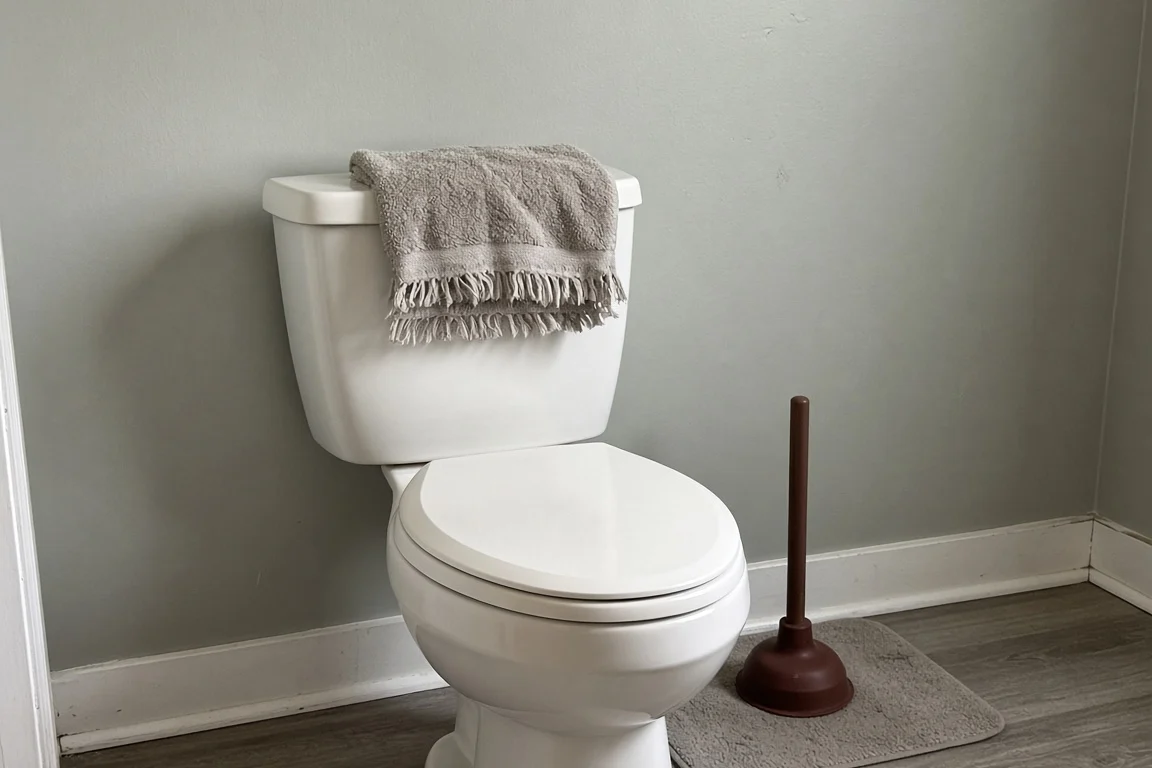
A new toilet can't fix a problem that isn't in the toilet. Running and clogging are the two complaints that most often send people shopping for a new one. Both are often caused by a cheap part or by a pipe further down the line. Before you pay for an install, it helps to know where the trouble really lives.
With a clog, the biggest clue is what your other drains are doing. Here's how to read it:
- Only this toilet is slow, and the sink and tub drain fine. The blockage is likely in the toilet or just below it. A plunger or a toilet auger usually clears it.
- The tub or shower gurgles or backs up when you flush. The blockage is past the toilet, in the shared drain. A new toilet won't change that. Drain cleaning will.
- Several drains in the house are slow, or water comes up in a lower floor drain. That points to the main line. A sewer camera inspection can show what's in there and where, so nobody has to guess.
- Something got flushed that shouldn't have, like a toy, a toothbrush, or a pile of wipes. Even wipes sold as flushable don't break apart the way toilet paper does. The object can lodge in the curve inside the toilet. Sometimes the toilet has to be pulled to get it out. Pulling it and setting it back with a fresh wax ring is still a repair, not a replacement.
Running toilets have their own tells. Beyond the worn flapper and fill valve covered above, a toilet can leak quietly without ever making a sound. Here's an easy check. Put a few drops of food coloring in the tank and don't flush for about 15 minutes. If color shows up in the bowl, water is slipping past the flapper. If you hear the tank refill on its own when no one has used it, that's the same leak. If the water in the tank sits above the top of the overflow tube, the fill valve is set too high and water is draining away all day. All three are part fixes. None of them is a reason to buy a new toilet.
A slow, steady leak is easy to ignore because it's quiet. You might only notice it when the water bill climbs with no other explanation. That's worth fixing soon, but it still isn't a sign the toilet is done.
So when does a running or clogged toilet cross over into install territory? When the simple causes are ruled out. If the drain line checks out clear, the inside parts are new, and the toilet still clogs or still can't hold a full flush, then the toilet itself is the next suspect. That's when the replacement signs above start to apply, and a new toilet becomes the fix that holds.
If you're not sure which side of that line you're on, say so when you reach out. Asking whether it's a repair before anyone quotes an install is a fair question, and a straight answer can save you the cost of a toilet you didn't need.
What Happens During a Toilet Installation
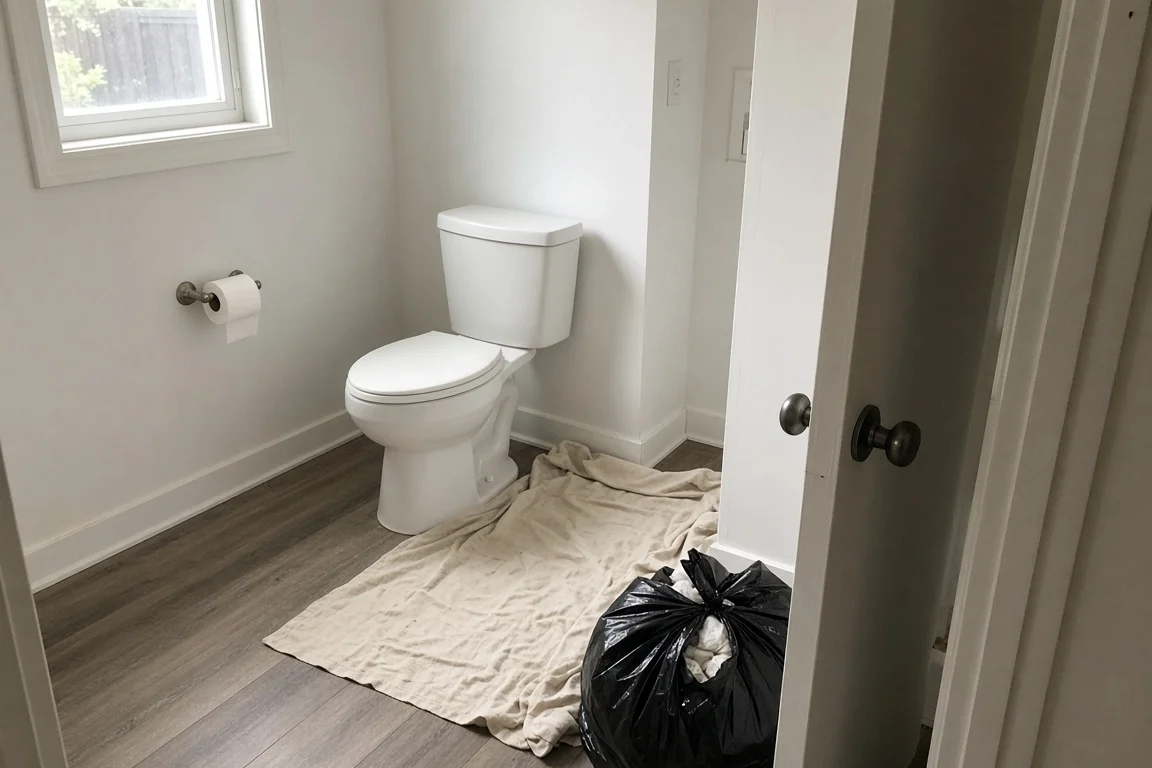
A new toilet looks simple. It's a bowl, a tank, and a few bolts. The parts that decide whether it stays sealed for years are the ones you never see once it's in. Here's what a careful toilet installation involves, so you know what to expect and what to ask about.
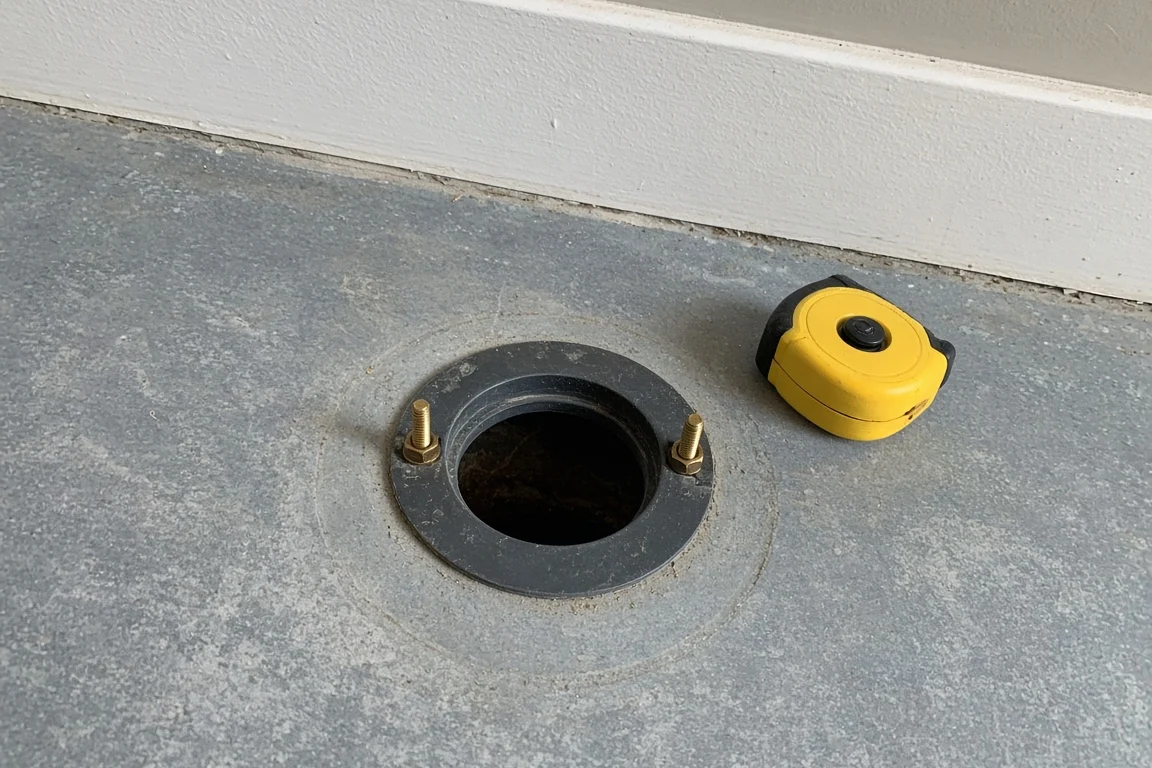
It starts before the new toilet even shows up. Toilets are built to fit a set distance from the wall to the center of the drain, called the rough-in. Most homes use 12 inches, but some older bathrooms use 10 or 14. If the new toilet doesn't match, it either won't fit or will sit too far from the wall. A quick tape measure check from the finished wall to the floor bolts saves a return trip to the store.
On install day, the work usually goes in this order:
- Shut off and drain. The water gets turned off at the valve behind the toilet, then the tank and bowl are emptied. If that old shutoff valve won't close all the way or drips when it's turned, it's smart to replace it now, while the wall is easy to reach.
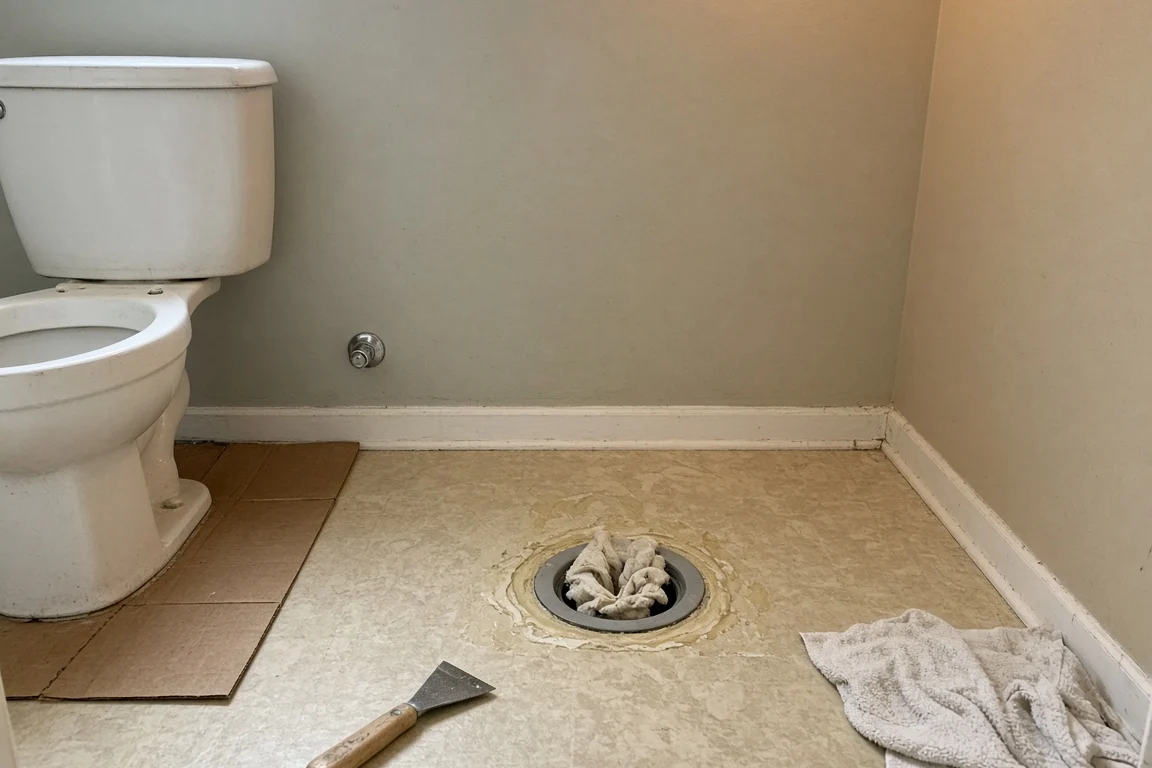
- Remove the old toilet. The supply line comes off, the floor bolts come loose, and the toilet lifts straight up. The old wax ring gets scraped away so the drain opening is clean.
- Check what's under it. This is the step that matters most. The flange is the ring that ties the toilet to the drain pipe. If it's cracked, rusted, or sitting too low, a new seal won't hold. The subfloor gets checked too. As noted above, a soft floor has to be fixed first, or the new toilet won't stay tight.
- Set the seal and the toilet. A new wax ring or wax-free seal goes on, along with new floor bolts. The toilet gets lowered straight down so the seal isn't smeared, then leveled with shims if the floor isn't flat.
- Tighten with care. The bolts get snugged evenly, a little at a time on each side. Too much force can crack the porcelain, and a cracked base means starting over.
- Connect and test. A new supply line goes on, the water comes back on, and the tank fill level gets set. Then the toilet gets flushed several times while the base and every connection are checked for drips.
Many installers caulk around the base at the end and leave a small gap at the back. That way, if the seal ever fails, water shows up where you can see it instead of soaking quietly into the floor.
A straightforward swap often takes a couple of hours. It takes longer when the flange needs repair, the shutoff valve needs replacing, or the floor needs work. Those are also the things most likely to change a quote, so it's fair to ask how each one would be handled before the old toilet comes up. You can also ask whether hauling away the old toilet is included, since that varies from one provider to the next.
Our team brings 20 years of hands-on plumbing experience to this work, and we're licensed with the Oregon CCB under License #257405. That matters most in the step you won't see: making sure the flange and floor are solid before a new toilet goes on top of them.
Permits and Licensing for Toilet Replacement in Lake Oswego
For most people, the short answer is that a basic toilet swap is a small job. You take the old one out and set a new one on the same drain, in the same spot. Paperwork gets more likely as the job gets bigger. Before work starts, it's worth knowing which kind of job you have.
Whether a permit is needed depends on the scope of the work, not just the fact that a toilet is involved. These changes are the ones that tend to move a job out of simple swap territory:
- Moving the toilet to a new spot, which means moving the drain under the floor.
- Adding a toilet where there wasn't one, like a new half bath or a basement bathroom.
- Replacing or rerouting drain or water lines inside the wall or floor, not just the short supply line.
- Cutting out and rebuilding damaged subfloor or framing under the toilet.
- Folding the toilet into a larger bathroom remodel with other plumbing changes.
Rules can change, and they can depend on the details of your home. So the most reliable step is to check with the City of Lake Oswego's building office before a bigger job starts. If you hire someone, ask them plainly whether your job needs a permit and who will pull it if it does. A clear answer to that question is a good sign. A shrug is not.
Why bother when the toilet is just going to sit on the floor? When a permit is required, an inspection means someone else looks at the drain and venting work before it gets covered up. It also helps later if you sell. Buyers and inspectors may ask about bathroom work, and unpermitted changes to drains or layout can turn into questions you'd rather not answer at closing.
If you live in a condo or a building with a homeowners association, check those rules too. Some buildings have their own steps for shutting off water or scheduling plumbing work, and those are separate from anything the city asks for.
Licensing is the other half of this, and it's easy to check. In Oregon, contractors register with the Construction Contractors Board, and you can look up a license number to see whether it's active. Before you hire anyone for a toilet installation, here's what to ask:
- What's your CCB license number? Then look it up yourself.
- Who will do the work in my home, and are they qualified for plumbing work?
- If my job needs a permit, will you handle it, or is that on me?
- What happens to the quote if the flange or floor turns out to be damaged?
Our license is Oregon CCB #257405, and you're welcome to look it up before you call. If your project grows past a simple swap, we'd rather tell you so before the old toilet comes out than after.
One thing you don't need to worry about is shopping for a code-friendly toilet. New toilets sold today are built to use far less water per flush than many older models. So the toilet you pick off the shelf will already be made for today's water-use rules. Your choices come down to fit, height, shape, and how well it flushes.
What Affects the Cost of Toilet Installation
The cost of a toilet installation comes down to two things: the toilet you pick, and what's waiting under the old one. A plain swap on a solid floor is the simplest version of this job. The price climbs when the toilet is harder to handle or when the hidden parts need work. We can't give you a number without seeing the job, but we can show you what drives it.
These are the factors that matter most:
- Who buys the toilet. Some people pick their own and pay only for labor. Others have the installer supply it. Either way works. Just make sure each quote you compare covers the same thing.
- The type of toilet. A standard two-piece toilet is the easiest to set. A one-piece model is heavier and takes more care to lift and line up. A wall-hung toilet is a different project, because it needs a frame and drain work inside the wall.
- What turns up when the old toilet comes off. A worn flange, a soft subfloor, or a shutoff valve that won't close, all covered above, each add parts and time. You often can't know about these until the old toilet is lifted.
- A rough-in that doesn't match. If the new toilet doesn't fit the drain spacing you have, you'll need a different model or extra drain work.
- A bigger scope. Moving the toilet, adding a new one, or folding it into a remodel takes the job past a simple swap. That can mean more labor, and sometimes a permit too.
- Access and extras. A tight half bath, a heavy toilet carried up stairs, or hauling away the old one can each change the total. Setting more than one toilet on the same visit may also change how the work is priced.
How the quote is built matters as much as the total. Some plumbers charge a flat price for a standard install. Others charge for time plus parts. A flat price is easy to compare, but you'll want to know what it leaves out. A time-based price can be fair for an easy swap, but it's harder to predict if problems show up under the toilet.
Before you say yes to any quote, ask these questions:
- Is this a flat price, or time plus parts?
- Does it include a new wax ring or seal, new bolts, and a new supply line?
- Is taking away the old toilet included?
- If you find a problem under the old toilet, will you stop and tell me the added cost before you go ahead?
That last question is the big one. The cheapest quote can turn costly if it assumes everything under the toilet is fine and then grows once the floor is open. A quote that names those what-ifs up front is easier to trust, even if it isn't the lowest number on paper.
Still not sure if you need a new toilet at all? Ask us that first. It's often the question that saves you the most money.
Toilet installation is one of the Lake Oswego bathroom remodeler services we provide, and you can book a toilet installation once you know a new toilet is the right fix.
Frequently Asked Questions
Common questions about Toilet installation
Can I keep my old toilet seat or other parts when I get a new toilet installed?
You can reuse a seat if it still fits and functions well, but we recommend fresh bolts, a new wax ring, and a new supply line every time. Old hardware is often rusted or worn, and reusing it raises the chance of a leak later. Fresh seals and bolts are cheap insurance compared to a repeat visit.
How long does it take to get a new toilet installed once I call?
A straightforward swap on a solid floor usually takes a couple of hours once work begins. The timeline stretches if the flange needs repair, the shutoff valve has to be replaced, or the subfloor needs attention. We'll walk you through what to expect once we see your bathroom.
Do I need to buy the new toilet myself before you install it?
Either way works, as long as we know the rough-in measurement ahead of time. Some homeowners prefer to pick their own toilet and style, while others want us to supply it as part of the job. Just confirm with us which option your quote covers before install day.
What should I do if I flushed something that got stuck, like a toy or wipes?
Stop flushing and call us before you try to force it through. Items like toys, toothbrushes, or wipes often lodge in the curve inside the toilet, even when the package says flushable. Sometimes the toilet has to be pulled to clear it, which is a repair, not a sign you need a new one.
Ready to Get Started?
Call (971) 455-3804 now for a free estimate.
Call (971) 455-3804Open 7 AM to 11 PM, seven days a week.