Plumbing leak repair
Plumbing Leak Repair in Lake Oswego
4.9 ★ on Google (16 reviews)Open 7 AM to 11 PM, 7 days
Decide If Your Leak Needs a Licensed Plumber Right Now
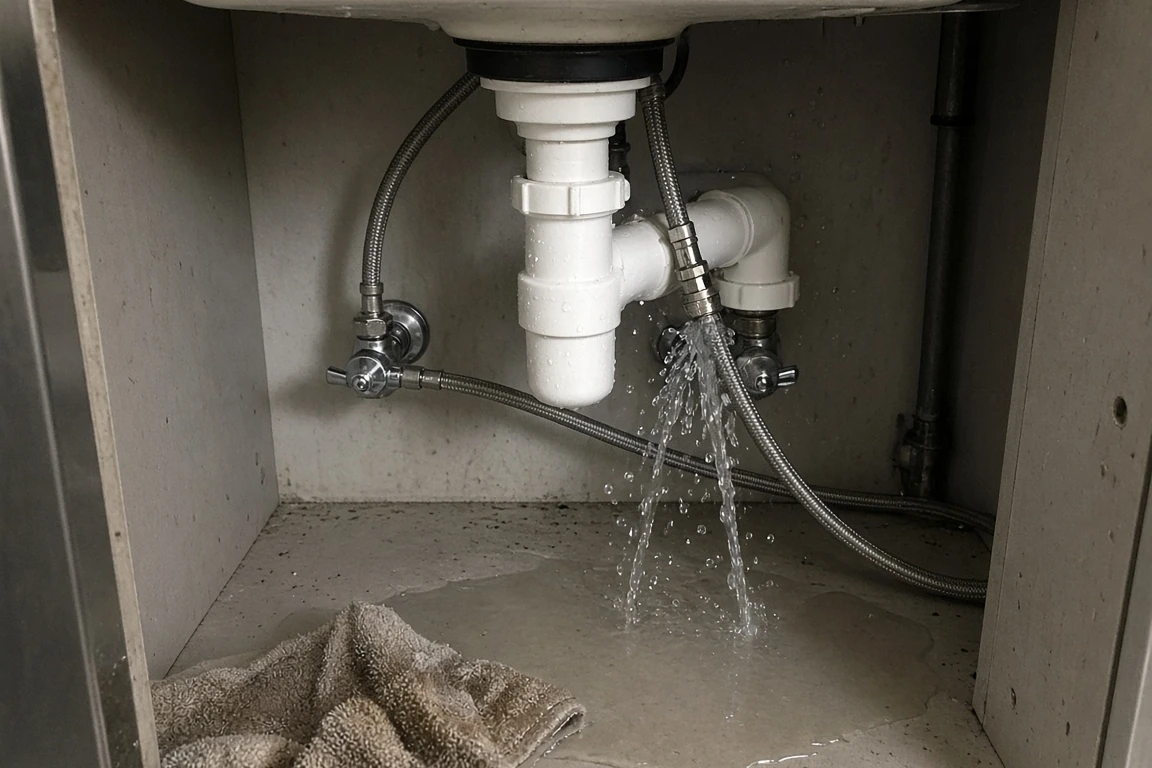
Water you can't stop, water near electrical, or water coming through a ceiling needs a plumber now. A slow, steady leak you can see and catch can usually wait for a scheduled visit. A simple faucet drip or running toilet is often something you can fix yourself.
Plumbing leak repair starts with one simple question: how fast is this getting worse? The water you see isn't always where the leak is. A stain on the ceiling may come from a pipe several feet away. A damp cabinet floor may come from a supply line, a drain joint, or the fixture itself. The size of the puddle tells you less than how the leak acts over the next hour.
Call right away if you notice any of these:
- Water is spraying or flowing, and it doesn't slow down when you stop using fixtures.
- A ceiling is sagging, bulging, or dripping in more than one spot.
- Water is near outlets, light fixtures, or your electrical panel.
- Your water heater is leaking from the tank itself, not just from a fitting.
- Your water bill jumped, or you hear water running when everything's off. Both point to a hidden leak that keeps adding damage.
Our emergency plumbing hours are 7 AM to 11 PM, seven days a week. That covers burst pipes, major leaks, and water heater failures. If your leak fits the list above, it's worth a call even late in the evening.
Some leaks are real, but they aren't emergencies. Picture a slow drip under the bathroom sink that fills a small cup over a day. Or a toilet that seeps a little at the base when you flush. These still need attention, because water that sits under floors and in cabinets causes rot and mold over time. But a bucket and a towel can buy you a day or two to book a normal visit and compare your options.
Some leaks you can fix yourself. A faucet that drips from the spout often just needs a new cartridge or washer from a hardware store. A toilet that runs nonstop usually has a worn flapper inside the tank, and that's a cheap part most people can swap in a few minutes. If a fitting under the sink drips, try snugging it by hand first. If it stops and stays dry, you may not need us at all.
The line moves when you can't find the source, when the leak is inside a wall, under a floor, or in a slab, or when a fix you tried didn't hold. Guessing gets expensive at that point. Opening the wrong wall or replacing the wrong part costs money and doesn't stop the water. Our team holds Oregon CCB License #257405 and brings 20 years of hands-on plumbing experience. We work to find where the water starts before anyone talks about repairs, then explain what we found in plain language, so you can decide with real information.
Know When You Can Fix It Yourself First
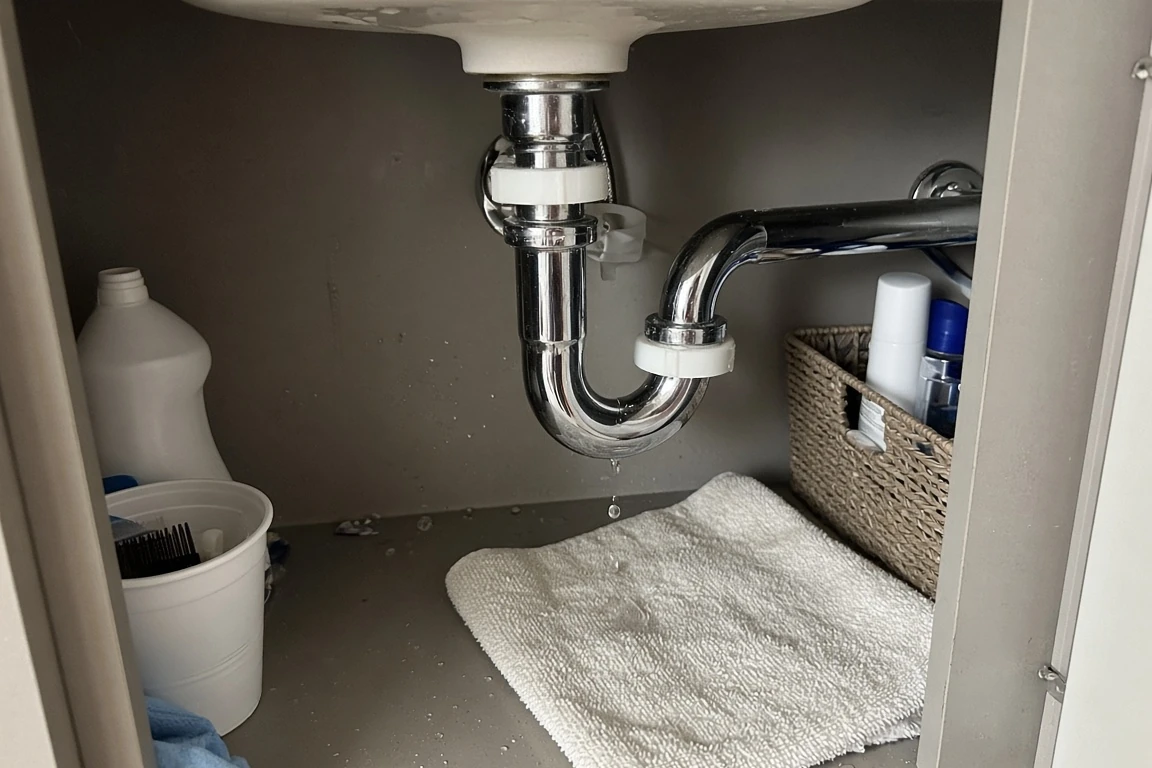
Plenty of leaks are small enough to handle on your own, and we'd rather you save the money when you can. The trick is knowing whether your leak is one of them before you start turning wrenches. A drippy spout or a running toilet, like the ones covered above, are classic examples. But plenty of other leaks look just as simple and aren't.
A leak is usually a fair DIY job when all four of these are true:
- You can see exactly where the water is coming from.
- You can reach it without opening a wall, floor, or ceiling.
- You can shut off the water to that spot, and the valve works.
- The fix is one part, like a washer, a flapper, or a new supply hose.
If even one of those isn't true, the job gets harder fast.
Start with the shutoff. Most sinks and toilets have a small valve on the pipe coming out of the wall. Turn it clockwise to close it. If it won't budge, or it starts dripping when you turn it, stop there. Old valves can crack or fail when forced, and then you've got a bigger leak and no easy way to stop it. Find your main shutoff before you touch anything, so you know where it is if things go sideways.
Next, figure out which part is leaking. Dry every pipe and joint with a paper towel. Then run the water and watch which spot gets wet first. If it only leaks while water is draining, the problem is likely a drain joint or the trap under the sink. If it drips all the time, even when nothing's running, it's on the supply side, where the water is under pressure. Supply leaks tend to get worse faster.
Not sure you even have a leak? Turn off every faucet and appliance, then look at your water meter. If the dial or small leak indicator keeps moving, water is going somewhere. For toilets, put a few drops of food coloring in the tank and wait about 15 minutes without flushing. Color in the bowl means the tank is leaking into it. These checks tell you a leak exists. They don't tell you where it is.
Stop and call for help if you run into any of these:
- The fitting or pipe is cracked, or covered in green or white crusty buildup.
- The repair means cutting pipe or using a torch.
- A shutoff valve won't close all the way.
- The leak comes back a few days after your fix.
- Your meter shows a leak, but you can't find any water you can see.
- The source seems to be behind a wall, under a floor, or in the slab.
Trying first is fine. Just don't keep swapping parts and hoping. Each guess costs money and time while water keeps doing damage. And if you do call, tell us what you already tried. It helps narrow down where the water is really coming from.
Match Your Leak Symptom to the Right Repair
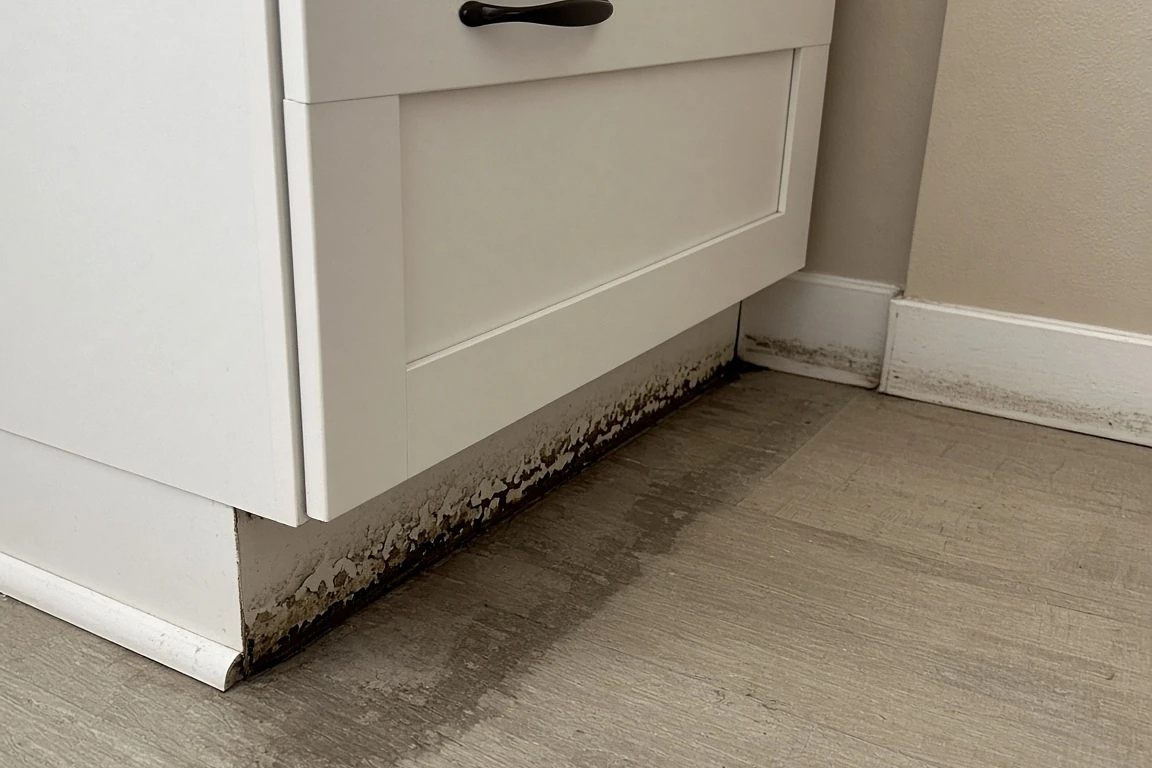
Once you know a leak isn't a quick DIY job, the next question is what kind of repair it needs. The symptom you notice gives a strong hint. It doesn't give the answer. Two homes can show the same wet spot and need very different fixes. That's why we find where the water starts before we talk about a repair.
Here's how common symptoms tend to line up with the repairs they lead to:
- A stain or drip on a ceiling under a bathroom. This could be a supply pipe, a drain joint, or a worn seal around a shower or tub. If it only shows up after someone showers, the shower valve, drain, or pan is a likely suspect, and that becomes a shower repair. If it drips all the time, a pressurized supply line is more likely, and the fix usually means opening a small access spot in the ceiling to repair that section.
- Water around the base of a toilet. Water that seeps out when you flush often points to the seal between the toilet and the floor, which is a toilet repair. Water that drips from the tank bolts or the supply hose is a different part and a different fix.
- A warm spot on the floor, the sound of running water, or a meter that moves when everything's off. On a home built on a concrete slab, this can mean a pipe is leaking under the floor. That calls for slab leak repair. The options range from fixing the pipe in place to running a new line around the slab, depending on where the leak is and what shape the pipe is in.
- A soggy patch in the yard, a wet spot between the meter and the house, or a sudden drop in pressure. These point toward the main line that brings water into your home. That's water line repair, and low pressure on its own is sometimes a separate issue worth checking.
- Water pooling around a water heater. A leaking valve or fitting can often be repaired. A leak from the tank itself usually means the heater has reached the end of its life, so the conversation turns to water heater repair versus a new install.
- Damp spots near floor drains, sewage smells, or several slow drains at once. This may be a drain or sewer line problem, not a supply leak. A sewer camera inspection lets you see the pipe before deciding on a drain repair or sewer line repair.
- Small pinhole leaks that keep popping up in different places. One leak gets a patch. Repeat leaks along older pipe may mean the pipe itself is wearing out, and repiping becomes worth discussing.
Notice how many of these overlap. A ceiling stain could be a shower, a supply pipe, or a drain. A pressure drop could be a buried line or something inside the house. Guessing from the symptom alone is how people end up paying for the wrong repair.
The same things that decide the repair also shape the cost. How easy is the pipe to reach? Is it behind finished drywall, under tile, or below concrete? What is the pipe made of, and is the rest of it in good shape? Is this one leak or a sign of more to come? A quick fix on an open pipe under a sink is a very different job than reaching a line under a slab. When we know the source, we can explain your options before any work starts, so you're not choosing in the dark.
What Happens During a Leak Repair Visit
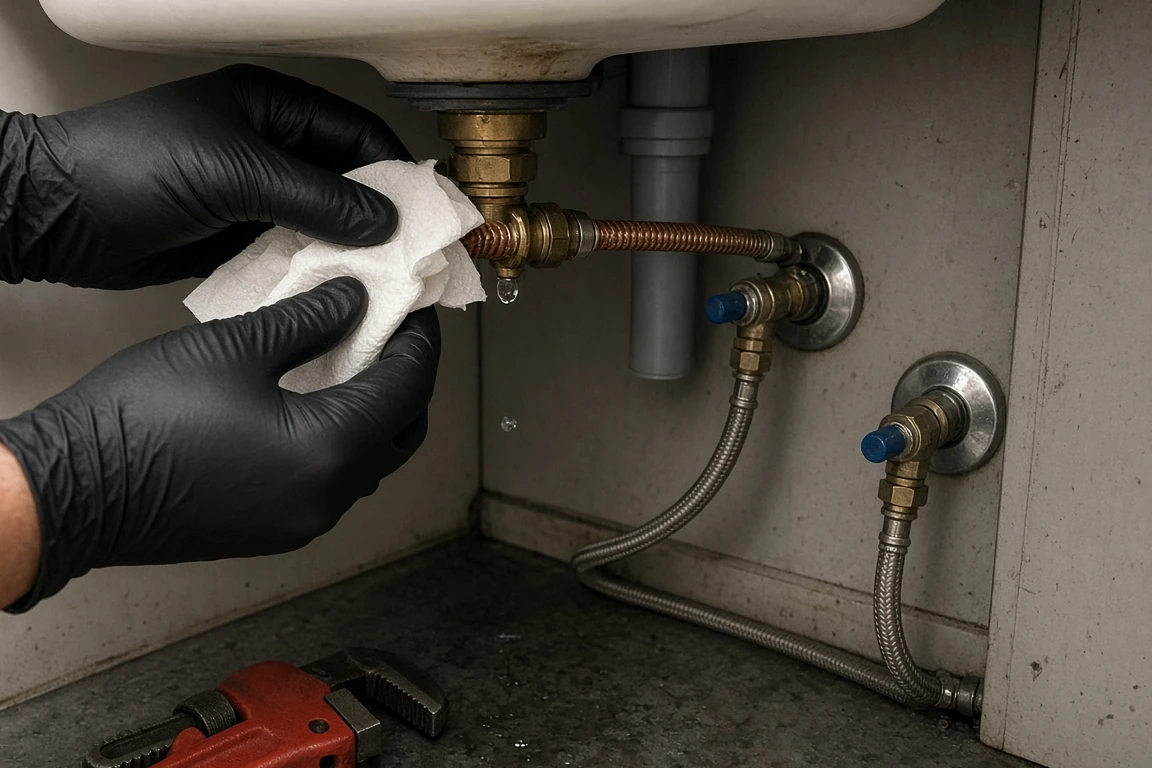
A leak repair visit goes better when you know what's coming. Not knowing makes people nervous. Will they cut into my wall? Will the job grow once they start? Most visits follow the same basic path: find the source, explain it, fix it, then check it. Here's what each step looks like and what you can do to help.
Before anyone arrives, a few small steps make a real difference:
- If water is still flowing, close the shutoff for that fixture or the main shutoff for the house.
- Take photos of the wet spots, stains and any damage. They're useful for your records and for insurance.
- Clear the area. Empty the cabinet under the sink, move boxes away from the water heater, and pull rugs or furniture away from wet floors.
- Write down what you've noticed: when the leak shows up, whether it happens only when a fixture runs, and anything you already tried.
When you call, share those notes. A detail like it only drips after someone showers upstairs can save a lot of searching.
The first job on site is finding where the water starts. That often means turning fixtures on and off one at a time, watching the water meter, and checking the pipes and joints you can reach. If the leak is hidden, the plumber may need a small access opening to confirm the spot. A small, well placed opening usually does less damage than several guesses. Ask before any cutting happens. You should know where the opening will go and why.
Once the source is clear, you should hear what's wrong and what your choices are before work begins. That's the moment to ask questions. Good ones include:
- What's causing the leak, and is it a one time failure or a sign of wear?
- Can this section be repaired, or does it make more sense to replace it?
- Will any wall, floor or ceiling be opened, and does the price include patching it or just the plumbing?
- What happens if you find more damage once you're in there?
Clear answers matter as much as the repair. Customers have told us in their reviews that they valued having the problem and the cost explained before work started. That's one customer's experience, not a promise for every job. It's still the kind of conversation you should expect from any plumber you hire.
After the fix, the water goes back on and the repaired spot is checked under normal pressure. A joint that looks fine with the water off can still weep once pressure builds. Run the fixture, look for drips, and feel around the fitting with a dry paper towel before calling it done.
Keep an eye on the area for the next few days too. Check the cabinet floor or the ceiling stain. If you had a moving meter, read it again with everything off. Wet materials take time to dry, so an old stain may stay for a while. A stain that grows or feels damp again is worth a call.
How Leak Repair Pricing Works
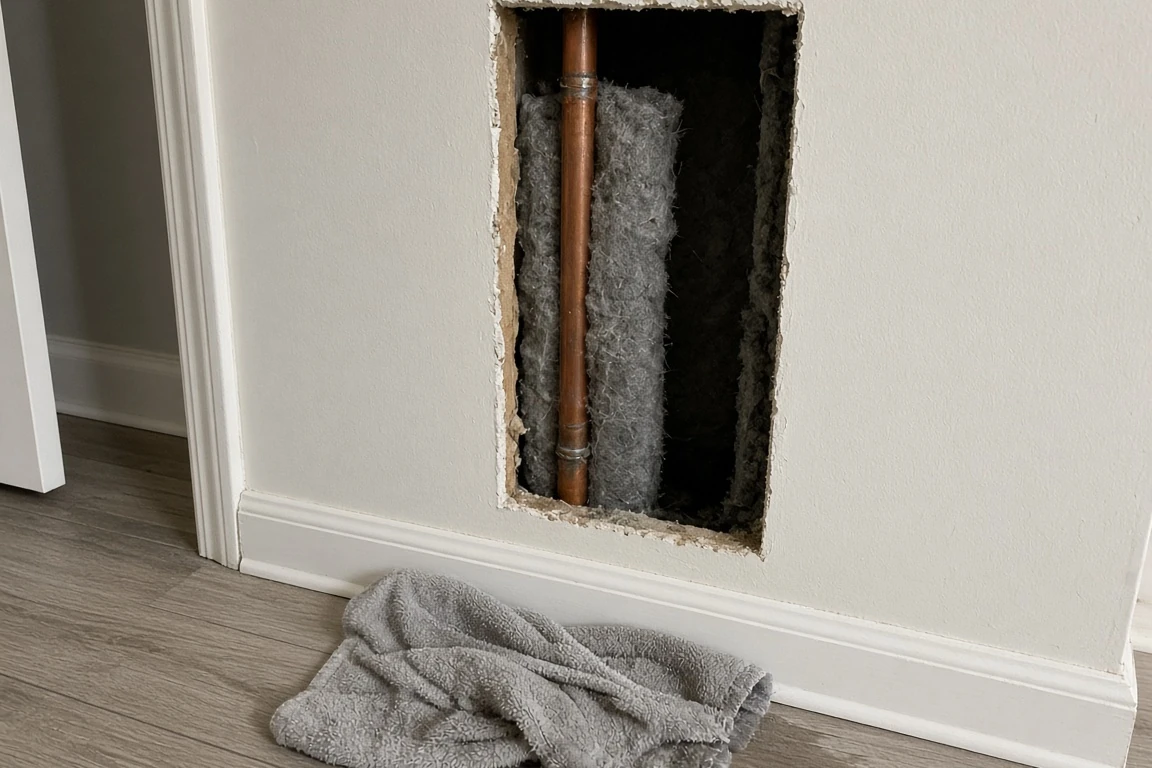
Nobody can give you an honest price for a leak they haven't found yet. That's the main reason leak repair quotes vary so much, and it's why the cost picture gets clearer once the source is known. Where the pipe sits and what shape it's in, covered above, drive most of the price. How a plumber builds the bill matters too.
Plumbers usually charge for leak work in one of two ways. Some use a flat rate. That's one set price for a defined job, like replacing a supply hose or resetting a toilet. You know the number before work begins, even if the job runs long. Others bill by time plus parts. That can cost less on a quick fix, but the total isn't fixed until the work is done. Neither model is wrong. Just know which one you're getting before anyone starts.
A leak repair quote may include some or all of these pieces:
- A trip or diagnostic charge for coming out and finding the source. Ask whether it's separate or gets folded into the repair if you go ahead.
- Labor for the repair itself.
- Parts and materials, from a simple washer to a length of new pipe.
- Access work, like opening drywall or a ceiling to reach the pipe.
- Patching or restoring that opening, which is sometimes left out of a plumbing quote.
That last point surprises a lot of people. Fixing the pipe and fixing the wall are two different jobs. Some plumbers close up the opening. Others leave a clean, open spot for you or a drywall pro to finish. Neither is a trick, but you should know which one you're paying for.
Timing can change the price, too. Many plumbers charge more for evening, weekend, or holiday calls. If your leak is slow and contained, the kind that can safely wait a day, ask whether booking a regular time would change the cost. If water is spreading, the damage it does overnight will likely cost far more than any after-hours difference.
Bigger jobs, like replacing long runs of pipe or rerouting a line, may need a permit. Ask whether one applies to your job and whether it's included in the quote.
Insurance is worth checking early. Many homeowner policies treat sudden water damage differently from slow, long-term leaks. Some cover the damaged ceiling or floor but not the pipe repair itself. Your policy decides that, not your plumber. The photos you took before the visit will help if you file a claim.
Before you agree to anything, ask these questions:
- Is this a flat price or time and materials?
- Does it include patching any opening?
- What happens to the price if you find more damage once you're in there?
- Is there a separate charge to diagnose the leak?
One of our reviewers wrote that the problem and the cost were explained before work started, with no surprise charges on the final bill. That's one customer's experience, not a promise for every job. Still, it's the standard you should hold any plumber to. A clear answer up front tells you more about a quote than the number alone.
Leak repair is part of the work we handle as a licensed plumber in Lake Oswego, so when you spot a drip, a stain or a jump in your water bill you can schedule a leak repair visit.
Frequently Asked Questions
Common questions about Plumbing leak repair
Can a leak really raise my water bill without any visible puddle?
Yes, a hidden leak can drive up your bill with no puddle in sight. Water can travel behind walls or under floors before it ever shows on a surface you can see. If your bill jumped or you hear running water when every fixture is off, check your water meter. A moving dial while nothing is running points to a leak somewhere in the line, even if you can't spot it yet.
Why does my leak keep coming back after I fix the same spot?
A repeat leak usually means the real problem is somewhere else, not the spot you patched. Pinhole leaks that keep popping up in different places along older pipe often signal the pipe itself is wearing out, not just one bad section. When that happens, patching the same area again and again wastes time and money. It's worth having the whole run checked instead of chasing each new drip one at a time.
Does a dropped shutoff valve or hard-to-close valve mean a bigger problem?
Yes, a shutoff valve that won't close all the way or cracks when forced is a sign of an aging valve, and it's a reason to stop and call for help. Old valves can fail under pressure, turning a small leak into a bigger one with no easy way to stop the water. If you find your valve sticking or dripping when you try to turn it, leave it alone rather than forcing it further.
Ready to Get Started?
Call (971) 455-3804 now for a free estimate.
Call (971) 455-3804Open 7 AM to 11 PM, seven days a week.