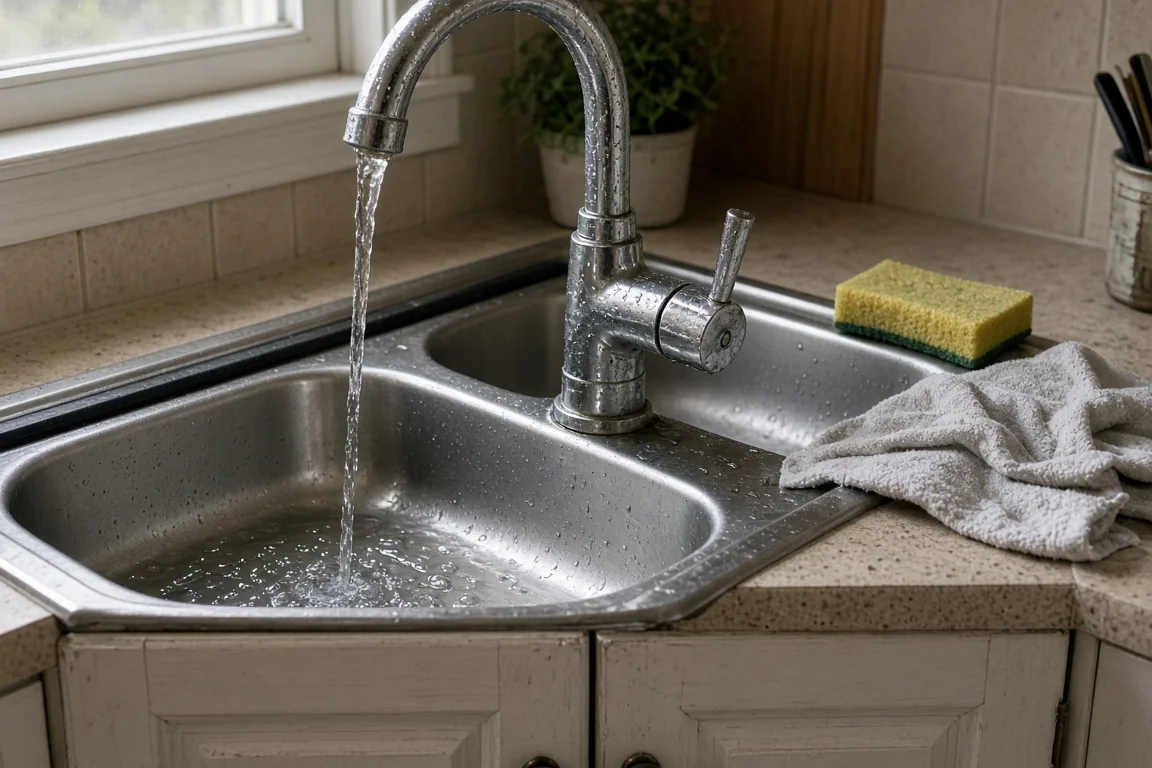
Signs Your Faucet Needs Professional Repair
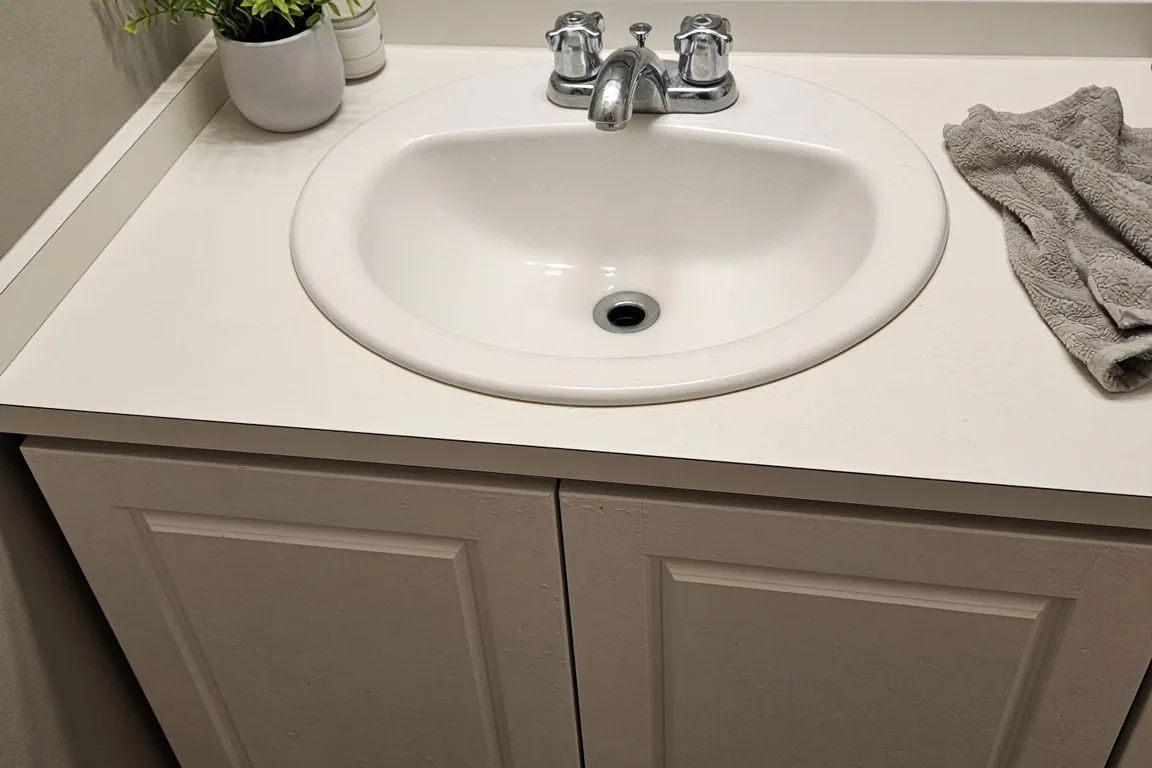
A slow drip from the spout often comes from one worn part and can be a simple fix. Water showing up under the sink, at the base, or with a sudden change in pressure or temperature points to something a plumber should look at. Knowing which sign you have tells you whether it can wait or should be handled soon.
Most faucet repair trouble starts small, so it's easy to put off. The trick is telling a worn washer apart from a problem that's quietly getting worse. Here's what each common sign usually means, so you can decide your next step with a clear head.
- A drip from the spout that won't stop. When the handle is fully off and water still drips, a seal, washer, or cartridge inside has likely worn out. It's a common repair, but a drip that keeps going adds up on your water bill over time.
- Water pooling around the base of the faucet. This usually means a seal near the bottom of the spout or handle has failed. Left alone, that water can seep into the countertop edge or the cabinet below.
- Dampness, stains, or a musty smell under the sink. This is the sign people miss most often. A slow leak from a supply line or connection can soak the cabinet floor for weeks before anyone opens the door.
- A stiff, loose, or wobbly handle. Handles that grind, spin too far, or won't shut off cleanly often have worn parts inside. Forcing them can make the damage worse.
- Weak or sputtering flow from just one faucet. If only one tap is slow, the cause may be buildup in the aerator or cartridge. If several faucets are weak, the issue is probably in your pipes, not the faucet.
- Hot and cold acting up. Water that won't get hot, changes temperature on its own, or only runs one temperature can point to a worn cartridge or mixing valve.
- Noise when you turn it on. Squealing, banging, or humming can mean loose or worn parts, or a pressure problem farther back in the line.
Some of these you can try yourself. If a faucet just drips from the spout, and you're comfortable shutting off the water and taking the handle apart, replacing a washer or cartridge is a fair weekend job. A slow trickle from a clogged aerator can often be fixed by unscrewing the tip and rinsing out the grit. If that works, you don't need us.
Call a plumber when you see water where it shouldn't be, when you can't find the source of a leak, or when a repair you tried didn't hold. The same goes for older faucets with stuck or corroded parts. Forcing a fitting that won't budge can crack it or damage the supply line, and that turns a small job into a bigger one.
Sometimes the faucet isn't the real problem. If the leak traces back to a pipe or fitting behind the wall, that's a job for our plumbing leak repair service. If weak flow shows up at every tap in the house, our low water pressure repair is the better place to start. And if the faucet or sink is worn past the point where repair makes sense, we also handle bathroom sink installation.
Repair or Replace: How the Decision Gets Made
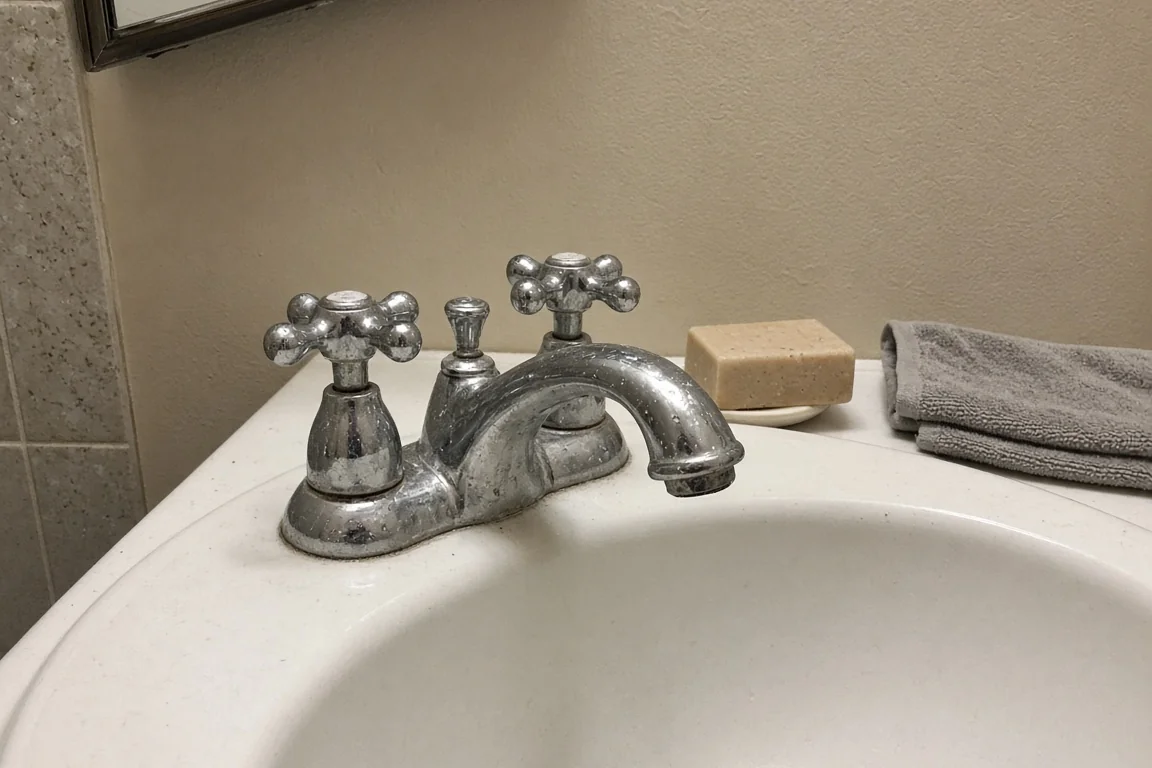
Most faucets don't need to be replaced. A drip, a stiff handle, or a temperature problem usually comes down to one small part inside, and swapping that part brings the faucet back to normal. The choice really gets made once the cause is clear. Until someone knows what failed and why, "repair or replace" is just a guess.
Here's what tips the decision one way or the other.
- What broke. A worn washer, O-ring, or cartridge is a repair. A crack in the faucet body or spout is different. Once the metal itself is split, new seals won't stop the leak for long.
- The shape of the outside. Heavy corrosion, flaking finish, or green and white crust around the base can mean the faucet is wearing out from the outside in. You can replace a part, but you can't fix a body that's breaking down.
- Whether parts still exist. Some older or off-brand faucets use cartridges that are hard to find or no longer made. If the right part can't be found, a new faucet may be the only clean fix.
- How many things are wrong at once. One bad cartridge is a simple job. A faucet that drips, wobbles, leaks at the base, and has a sprayer that won't work is telling you something. Fixing each problem one at a time can add up fast.
- How often you've been here before. If the same faucet keeps failing after repairs, the problem may be the faucet itself and not the parts.
- What's under the sink. Corroded shutoff valves or old supply lines can turn a quick repair into a bigger one. It's smart to know about them before work starts, whichever way you go.
Your own plans matter too. Maybe you're redoing the kitchen next year, or you've never liked how that faucet looks. In that case, putting money into a repair may not make sense. On the other hand, if the faucet matches the rest of your fixtures and works well apart from one leak, fixing it keeps everything looking the same and usually costs less.
Picture two kitchen faucets that drip the same way. One is in good shape with a worn cartridge you can still buy. That's a repair, and the faucet should keep going. The other has a pitted spout, a handle that's been fixed twice, and a part nobody stocks anymore. Same drip, but replacing that one is the better value.
When we look at your faucet, our goal is to tell you plainly what we found and what each choice involves, so you can decide. Ask us about anything that isn't clear. What failed? Can the part be found? Is anything else under the sink close to giving out? You should get straight answers before any work begins.
If repair is the right call, we'll say so, even when a new faucet would be the bigger job. If replacing makes more sense, you'll know exactly why. Either way, the choice is yours, and it's based on what's really going on with your faucet, not on a guess.
When You Can Skip the Service Call
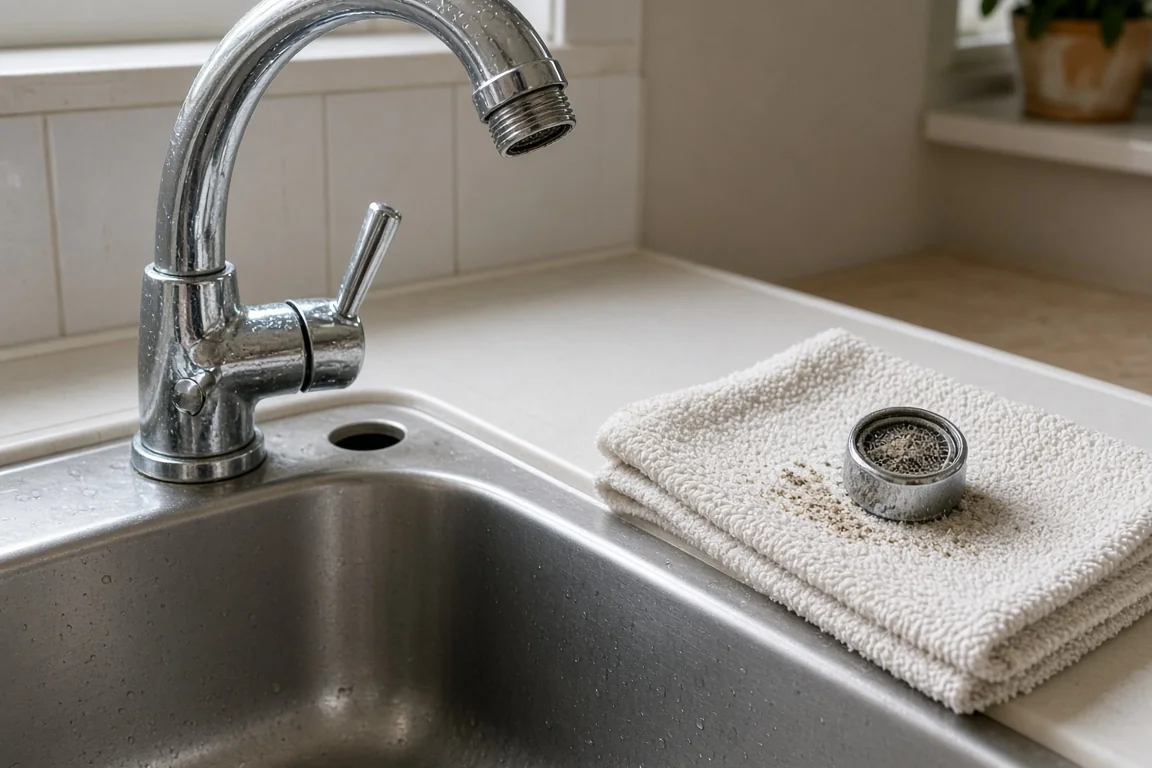
Not every faucet problem is a repair. Some things look like trouble but are normal, and some are five-minute fixes you can do with a tool from your junk drawer. Before you book anyone, check whether your issue is on this list.
- A few drops right after you shut it off. Water left in the spout drains out for a few seconds. If the dripping stops on its own, nothing is wrong.
- Cloudy water that clears in a glass. If the cloudiness fades from the bottom up after a minute, it's just tiny air bubbles. It's harmless and goes away.
- Sputtering after the water was turned off. If the water was shut off for work on your street or in your home, air gets into the lines. Run a few taps for a couple of minutes and it should settle down.
- A handle that feels loose. Many handles are held on by a small screw, often hidden under a cap or on the side. Tightening it with a screwdriver or a small hex key often takes care of the wobble. If it still spins freely after that, the parts inside may be worn.
- A pull-down sprayer that won't pull back in. Most of these use a weight clipped to the hose under the sink. If the weight slides out of place, the sprayer hangs loose. Move it back and the hose should pull back in again.
- Hot water that takes a while to show up. If a faucet is far from your water heater, it can take a bit for hot water to travel there. That's a distance issue, not a faucet problem.
If your problem is a spout that sprays sideways or a stream that's gotten weak, start with the aerator rinse covered above. Grit in the tip causes a lot of flow complaints, and cleaning it costs you nothing.
Some problems are real but don't need to be fixed today. A slow drip from the spout, with no water showing up under the sink or around the base, isn't an emergency. It wastes water and you'll want to fix it, but it can wait for a time that works for you. Put a cup under it for an hour if you want to see how much it's really losing. Then plan the fix, or do the washer or cartridge swap yourself if you're comfortable with it.
If you rent, call your landlord or property manager before you call anyone else. In many rentals, fixing faucets is the owner's job, and a repair you book on your own may not be covered. Condo owners may want to check with their HOA too, especially if a leak could reach a unit below.
If you're shopping for a new faucet anyway, you may not need a repair at all. A worn faucet you plan to replace in a few weeks can usually limp along until then, as long as it isn't leaking where it shouldn't.
What doesn't belong on this list is any water where it shouldn't be. Dampness in the cabinet, pooling at the base, or a leak you can't trace are the signs from the top of this page that are worth a call, not a wait-and-see.
Faucet Wear Patterns in Older and Newer Lake Oswego Homes
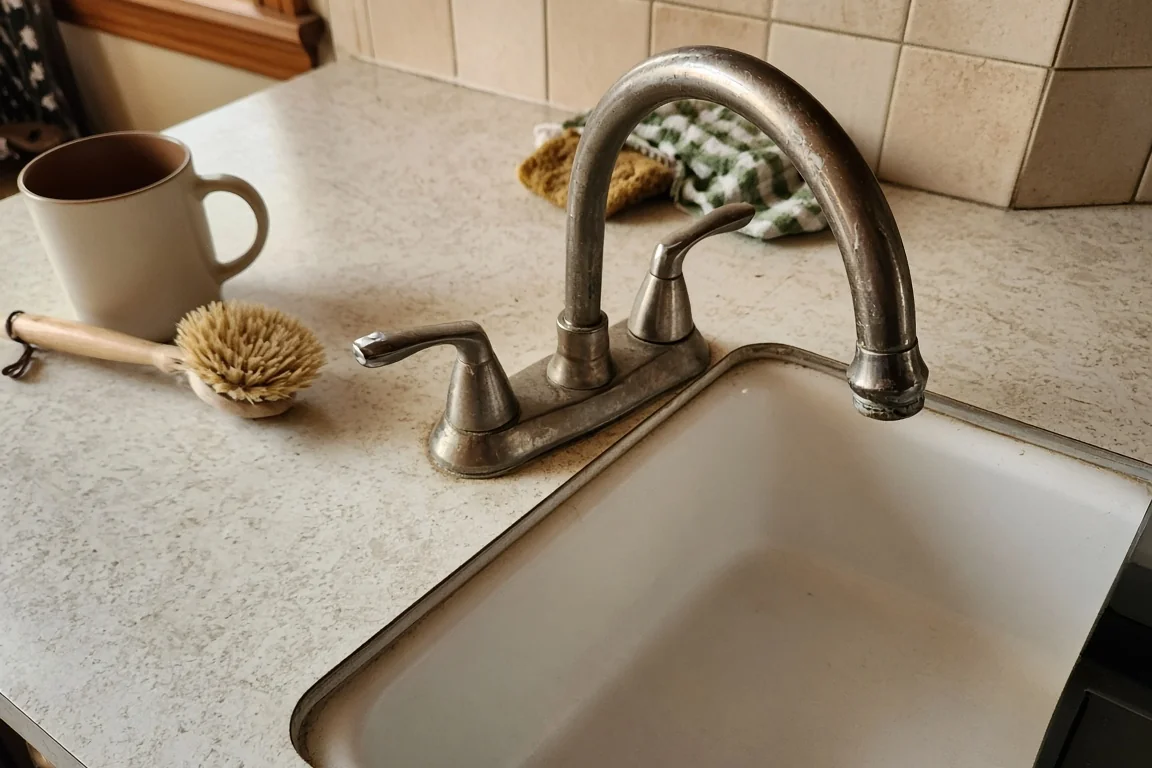
Lake Oswego has a mix of older homes, remodeled homes, and newer builds. The age of your faucet and the plumbing around it shapes what tends to wear out. It doesn't tell you the exact cause, but it gives you a good first guess before anyone opens the cabinet.
Older homes that still have their original fixtures often have two-handle faucets. Many of these use rubber washers that press down to stop the water. Each time you crank a handle shut, that washer gets squeezed a little more. Over the years it hardens, cracks, or wears flat, and the drip starts. The fix is often simple. The parts around it are where older homes get tricky.
- Handles and stems can be stuck in place by years of mineral crust and corrosion. They need a careful hand so the faucet body doesn't crack.
- Supply lines under the sink may be rigid metal tubes. These are harder to remove and replace than newer flexible lines.
- Shutoff valves that haven't been turned in a long time may not close all the way, or may start to leak once they're moved.
- Seat surfaces inside the faucet can wear rough. Then a new washer won't seal well until the seat is dealt with too.
None of this means an older faucet has to go. It just means the visit may take a little longer, and it's worth checking what's under the sink before the work begins, as covered in the repair or replace section above.
Newer homes, and remodeled kitchens and baths, usually have single-handle faucets with a cartridge inside. Many use ceramic discs that last a long time. When they do act up, the trouble often looks different.
- The cartridge wears or gets grit in it. That can cause a drip, a stiff handle, or water that won't mix hot and cold the right way.
- Pull-down and pull-out sprayers have a hose that bends every day. The hose or its connection under the sink can start to leak, and you may not notice until the cabinet floor is wet.
- Braided flexible supply lines are easy to install, but they don't last forever. An old one can weaken and leak at the fittings.
- Some parts are plastic, like clips and quick-connect fittings. They can crack if they're forced.
Cartridges are often made for one brand or model. Knowing the brand ahead of time can help, so if you still have the box, the paperwork, or a photo of the name on the faucet, keep it handy.
Remodeled homes can mix both styles. You might have a brand new faucet sitting on top of old shutoff valves and supply lines that were never replaced. The faucet looks new, but the parts behind it carry the same wear as the rest of the house.
So when you describe the problem to us, tell us roughly how old the faucet is, whether it has one handle or two, and whether the sink or kitchen has been updated. That helps us show up with a better idea of what we may find and explain your choices clearly once we see it.
What Happens During a Faucet Repair Visit
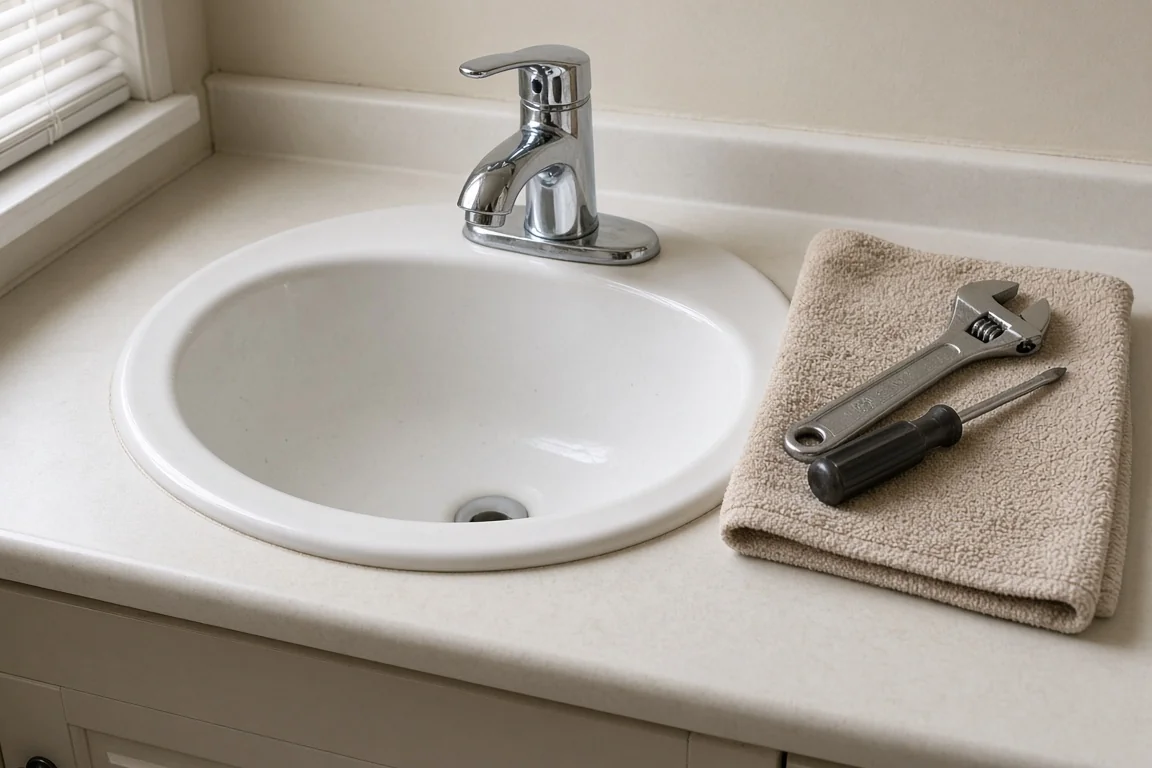
A faucet repair is usually a small, contained job. Most of the work happens under the sink and inside the handle, and only the water to that faucet needs to be off for most of it. Here's how a typical repair goes, so the visit doesn't feel like a mystery.
- Talking it through. You describe what you've noticed, when it started, and anything you've already tried. If you rinsed the aerator or swapped a washer yourself, say so. It saves time.
- Shutting off the water. The valves under the sink are closed first. If they're stuck or start to leak, as covered earlier, the water may need to be shut off for the whole house instead.
- Finding the cause. The handle comes off and the parts inside get checked: washers, O-rings, the cartridge, and the seat. The supply lines and connections under the sink get a look too.
- Explaining what was found. Before parts get swapped, you should hear what failed, what the fix involves, and what it will cost.
- Making the repair. The worn part is replaced with one that fits your faucet, and everything goes back together.
- Testing. The water comes back on slowly. Hot and cold both get run, the handle gets checked for a clean shutoff, and every connection under the sink gets checked for drips.
You can help before anyone arrives. Clear out the cabinet under the sink, set cleaning products somewhere safe, and keep pets out of the way. A towel and a flashlight nearby never hurt.
In the plumbing trade, some companies charge a set price for the job and others charge for time plus parts. Either way, the final cost of a faucet repair tends to come down to a few things:
- Which part failed, and whether it's easy to find for your brand and model
- Whether handles, stems, or fittings are stuck from corrosion and need extra care
- The shape of the shutoff valves and supply lines under the sink
- How many problems the faucet has at once
- How easy it is to reach, such as a tight cabinet or a garbage disposal in the way
Whoever you hire, ask two questions before work starts. Does the price cover the full job, parts included? And will they check with you before doing anything extra if they find another problem?
"They explain the problem and the cost before starting, with no surprise charges on the final bill." (A Google review from one of our customers)
That's one person's experience, not a promise about every visit. It's still the right standard to hold any plumber to. You should understand the cost before the first part comes off.
Faucet repair is everyday work for a Lake Oswego plumber open seven days a week, and if your faucet keeps dripping you can get a faucet repair scheduled.
Frequently Asked Questions
Common questions about Faucet repair
Can I keep using my faucet while I wait to get it repaired?
It depends on what kind of problem you have. A slow drip from the spout with no water showing up under the sink or at the base usually just wastes water, so it can wait for a time that works for you. But if you see dampness in the cabinet, pooling at the base, or a leak you can't trace, don't keep using it as normal. That's water going somewhere it shouldn't, and it's worth getting looked at soon instead of waiting it out.
How do I know if my faucet problem is coming from somewhere else in the plumbing?
Check whether the issue shows up at one faucet or several. If just one tap runs weak, the cause is likely buildup in that faucet's aerator or cartridge. If several faucets in your home are weak at the same time, the problem is probably in your pipes, not the faucet itself, and that calls for a different kind of fix.
What should I have ready before a plumber looks at my faucet?
Know roughly how old the faucet is, whether it has one handle or two, and whether the sink or kitchen has been updated. This helps a plumber get a better idea of what they may find before they even open the cabinet. If you still have the box, paperwork, or a photo of the faucet's brand name, keep that handy too, since cartridges are often made for one specific brand or model.
Ready to Get Started?
Call (971) 455-3804 now for a free estimate.
Call (971) 455-3804Open 7 AM to 11 PM, seven days a week.