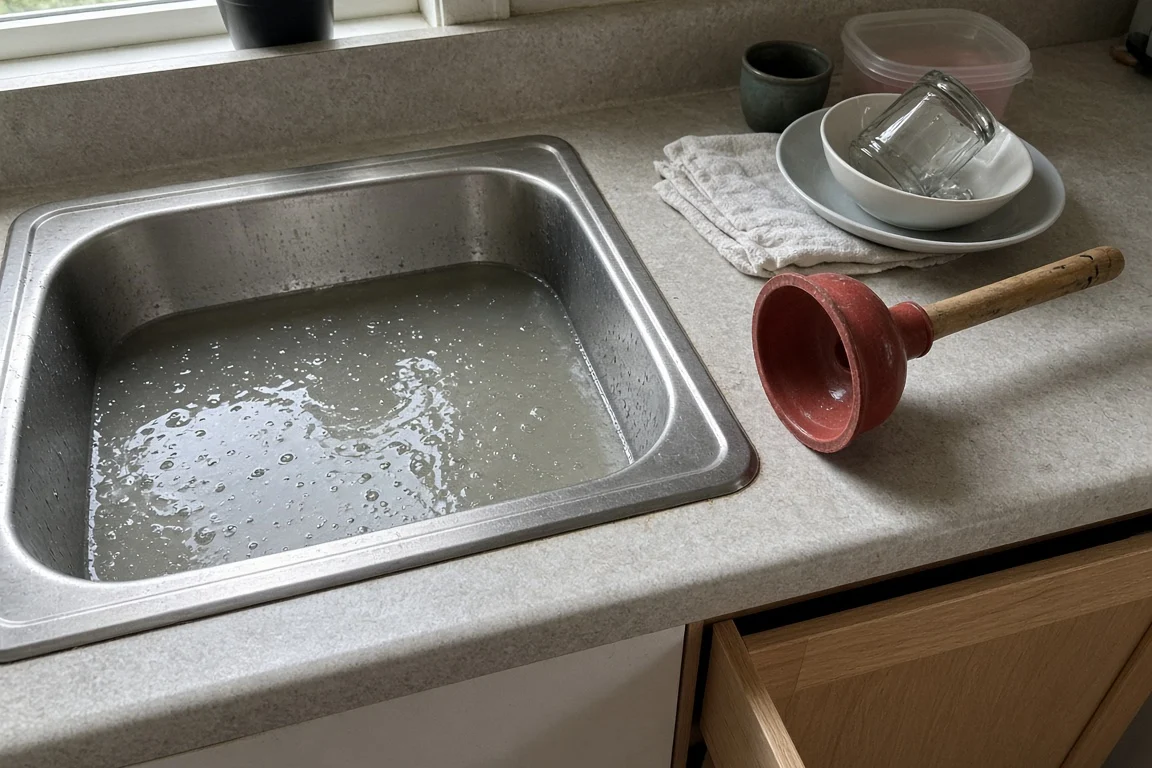
Know the Signs of a Simple Clog Versus a Bigger Drain Problem
One slow drain usually points to a clog close to that fixture. Several drains acting up at once, gurgling in other fixtures, or water coming up somewhere it shouldn't usually means the trouble is farther down, in the main line. Where the blockage sits decides what kind of drain cleaning will fix it.
Your drains give you clues before anyone opens a cleanout. The most useful clue is how many fixtures are affected. That one detail tells you a lot about where the blockage sits, and the location matters more than how bad it looks.
These signs usually point to a simple, local clog:
- Only one sink, tub, or shower is slow, and the rest of the house drains fine.
- The bathroom sink drains slowly after weeks of hair, soap, and toothpaste going down it.
- The kitchen sink backs up, but the dishwasher and other drains still work normally.
- The problem builds slowly over days or weeks instead of showing up all at once.
A clog like this is usually in the trap or the first few feet of pipe under that fixture. It's often hair, grease, soap scum, or food. It's annoying, but it's contained.
These signs point to something deeper:
- More than one drain is slow at the same time, especially on the lowest floor of the house.
- The toilet gurgles or bubbles when you run the washing machine or the bathtub drains.
- Water comes up in the shower or tub when you flush a toilet.
- You notice a sewage smell in the house or near a floor drain.
- A clog comes back a few weeks after it was cleared.
- You see soggy spots or extra green patches in the yard along the sewer line's path.
When water from one fixture shows up in another, it's backing up from a shared pipe. All your drains feed into one main line that carries waste out to the city sewer or septic system. If that line is partly blocked by roots, a buildup of grease, a sag, or a cracked section, the water has nowhere to go but back up into the lowest openings in your home.
Here's a common picture. You flush the upstairs toilet and hear the downstairs tub gurgle. A day later, there's gray water sitting in the tub that you didn't put there. Plunging the tub won't help, because the tub isn't the problem. The blockage is downstream of it.
Repeat clogs are worth a closer look too. If the same drain needs clearing every month, the first cleaning probably poked a hole through the blockage without removing it. Or something in the pipe, like a root or a broken joint, keeps catching debris. In that case, a sewer camera inspection can show what's really in the line, so the fix matches the cause.
You don't have to diagnose it perfectly yourself. Just notice which drains are slow, whether other fixtures react, and how long it's been going on. When you call us, those details help us understand whether we're likely dealing with one fixture or the main line in your Lake Oswego home, and what to bring up with you before any work starts.
Decide When a Clog Needs a Professional
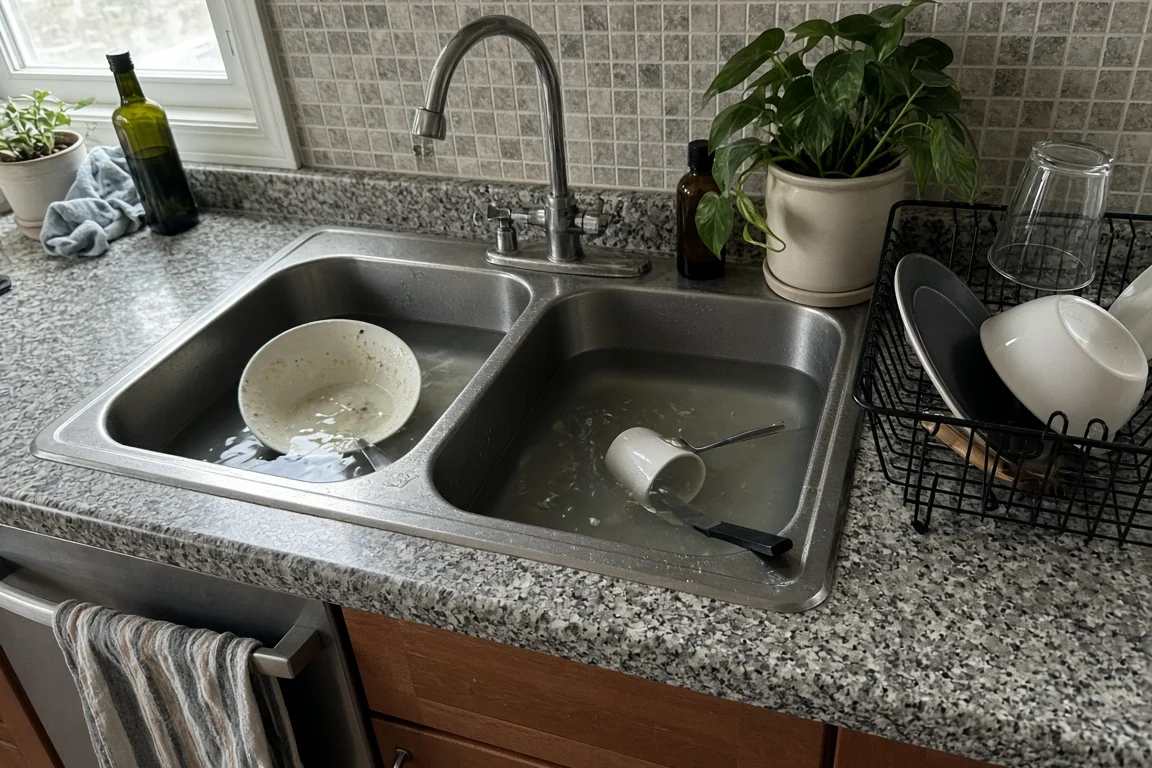
Not every clog needs us. If only one fixture is slow and the rest of the house drains fine, it's fair to try a simple fix first. A plunger on a sink or tub, or pulling the hair out of a bathroom stopper, clears a lot of local clogs. If that works and the drain stays clear, you're done. You don't need to book anything.
It's also fine to wait a little when a drain is just a bit slower than normal and nothing else in the house is acting strange. Keep an eye on it for a few days. If it gets worse, or other drains start to slow down, that tells you something has changed.
The point to stop and call is when your own effort isn't working or the clog is clearly bigger than one fixture. Here's where a professional usually makes more sense:
- You've tried plunging and the drain is still stopped or only clears for a day.
- More than one drain is slow, or one fixture reacts when you use another. That points to the main line, which a plunger can't reach.
- The same drain clogs again within a few weeks of being cleared.
- Water or sewage is backing up into a tub, shower, or floor drain.
- You smell sewage inside the house.
- You aren't sure where the cleanout is, or you don't want to open lines yourself.
Why does it matter who clears it? A quick fix that only pokes a small hole through the blockage can make the drain look fine while the real cause stays put. That's how people end up clearing the same clog over and over. When the problem is in the main line, the goal is to clear the whole pipe and, when it makes sense, see what's inside it. That way you know whether you're dealing with built-up grease, roots, or a damaged section of pipe. A sewer camera inspection can answer that, and the answer changes what fix is worth paying for.
Some situations shouldn't wait for a convenient day. If sewage is coming up into the house, or the only toilet won't flush and the house is backing up, treat it as urgent. Stop running water, the washer, and the dishwasher so you don't push more into a blocked line. Our emergency plumbing is available 7 AM to 11 PM, seven days a week, and that covers backed-up drains and sewer backups.
If you're still unsure, think about it this way. One drain, one clog, and your fix worked? Leave it. Several drains, a clog that keeps coming back, or water showing up where it shouldn't? That's a line problem. Guessing at it usually costs more time than it saves. When you call, tell us what you've already tried. It helps us understand what's been ruled out and what to talk through with you before any work starts.
Skip the Service Call for These Minor Clogs
Some drain problems really are small. If one of these sounds like your situation, you probably don't need us, and we'd rather you save the money.
These are usually fine to handle yourself or leave alone:
- A bathroom sink that slowed down after weeks of hair and soap, and drains normally again once you've cleaned out the stopper.
- A tub or shower that holds an inch of water during a shower, then empties within a minute or two after you turn it off. That's usually hair collecting near the drain opening, not a line problem.
- A toilet that clogged once because too much paper went down at one time, cleared with a plunger, and has flushed fine since.
- A kitchen sink that backed up right after a big meal cleanup, then drained on its own and hasn't done it again.
- A drain that's a little slower than it used to be, with no smell, no gurgling elsewhere, and no change over the past week or two.
What these have in common is that they're tied to one fixture, they have an obvious cause, and they stop once the cause is gone. A clog that clears and stays clear is a finished problem.
Some issues aren't clogs at all, and they're worth ruling out before you call anyone:
- A sink pop-up stopper that sits too low. Water drains slowly because the stopper is partly closed, not because the pipe is blocked. Lift it out or check that it opens all the way.
- A sewer smell from a guest shower, a basement floor drain, or a sink nobody uses much. Every drain has a curved trap that holds water to block sewer gas. When a drain sits unused for weeks, that water can dry up. Running water in it for a minute often brings the seal back, and the smell fades.
- A sink that drains fine but has a faint odor. That's often buildup on the stopper or around the drain opening, which you can clean by hand.
The dry trap is the one that catches people off guard, since sewage smell was on our list of warning signs earlier on this page. The difference is where it comes from. A smell from one drain you rarely use, which goes away after you run water, is a dry trap. A smell that comes back, or shows up near drains you use every day, or comes with slow drains or gurgling, is a different story.
A few small habits keep minor clogs from turning into repeat ones. Put a hair catcher over the tub and shower drains and empty it often. Wipe greasy pans with a paper towel before washing them, so less grease goes down the kitchen sink. Keep wipes, cotton swabs, and paper towels out of the toilet, even when the package says they're flushable.
None of this needs special tools or much time. If your problem fits one of the cases above and it stays fixed, you've handled it. It's no longer a minor clog when it keeps coming back, spreads to other drains, or doesn't respond to the basic fixes covered above. Those are the signs that the blockage sits somewhere you can't reach from the drain opening.
What Happens During a Drain Cleaning Visit
A drain cleaning visit follows a simple order. First, find where the clog is. Next, pick the tool that fits it. Then clear the line and check that water moves the way it should. You can ask questions at any step, and you should.
It starts with a short talk about what you've noticed: which drains are slow, whether other fixtures react, and what you've already tried. Those details help narrow down whether the clog is near one fixture or out in the main line before anyone opens a pipe.
- Getting to the clog. A local clog is often reached through the trap under the sink or through the drain opening. A main line clog is usually reached through a cleanout, which is a capped pipe inside the house or outside near the foundation. Sometimes a toilet has to come off the floor to give a clear path into the line.
- Choosing the method. A small clog near one fixture often clears with a hand auger, a thin cable that grabs or breaks up hair and gunk. A main line usually needs a longer, motorized cable that can reach farther. When grease, sludge, or roots coat the inside of the pipe, hydro jetting may be the better fit. It uses high pressure water to scour the pipe walls instead of just punching a hole through the blockage. We offer hydro jetting when the line calls for it.
- Looking inside when it makes sense. If the clog keeps coming back or something seems off, a sewer camera inspection shows what's really in the pipe, such as roots, a sag, or a cracked joint. You can see the problem for yourself instead of taking someone's word for it.
- Testing the drain. Once the line is clear, water should run through the affected fixtures, and often a few others, to make sure everything drains and nothing backs up elsewhere.
Scope and cost depend on what's found. The main factors are how hard the clog is to reach, whether it's in one fixture or the main line, how far down the pipe it sits, and whether a camera inspection or jetting is needed. A single sink clog is a much smaller job than a root-filled sewer line. That's why it helps to hear what the plan is before work starts.
They explain the problem and the cost before starting, with no surprise charges on the final bill. (One reviewer's description of their experience with us)
That's one customer's account, and every job is different. Still, it's the conversation you should expect from any plumber: what's wrong, what they plan to do, and roughly what it'll cost, all before the work begins.
A little prep makes the visit go faster. Clear out the cabinet under the sink that's clogged. Move boxes or storage away from any basement floor drain or indoor cleanout. If you know where the outdoor cleanout is, mention it. Keep pets in another room, and hold off on running water, laundry, or the dishwasher until the line is clear.
Sometimes cleaning isn't the whole answer. If the camera shows a broken or collapsed section of pipe, clearing it again won't keep it clear for long. That's when drain repair or sewer line repair becomes the next decision, and you'll have the footage to help you make it.
Ask These Questions Before You Hire a Drain Cleaning Service
A good plumber won't mind your questions. A few clear answers before any work starts tell you whether you're paying to clear the real problem or just to open a small path through it. You can ask these of anyone you're thinking about hiring, including us.
- Are you licensed in Oregon? Ask for the contractor's Construction Contractors Board license number. You can look it up with the Oregon CCB yourself. Ours is Oregon CCB License #257405.
- How do you charge for drain work? Plumbers price this in different ways. Some charge a flat rate per drain. Some bill by the hour. Others charge a trip fee plus labor. Evening or weekend rates may also be different. Ask which model applies to you and what it includes.
- What would change the price? Ask what happens to the cost if the clog turns out to be in the main line instead of one fixture, or if a camera or jetting is needed. You want to hear this before work begins, not after.
- Where do you think the clog is, and why? The answer should connect to what you described, like one slow sink or a gurgling toilet when the washer drains. A vague answer is worth a follow-up question.
- Which tool will you use, and why that one? A cable and hydro jetting do different jobs. Ask why the method they picked fits your pipe and your clog.
- Would a camera inspection help here, and will I see the footage? Not every clog needs one. If yours keeps coming back, seeing inside the line can save you from paying for the same cleaning again and again.
- What happens if the line won't clear or the pipe is damaged? Ask whether you'll get to decide on any extra work before it happens.
- How will you check that it's really clear? Running water through more than one fixture is a fair way to test it.
- What can I do to keep this from coming back? A useful answer is specific to your cause, such as grease habits in the kitchen or roots in the sewer line.
Watch for a few warning signs too. Be careful if someone won't give you a license number. Be careful if the price stays vague after you've asked twice. Be careful if you're pushed toward a big repair without being shown why. If someone recommends replacing a section of pipe, it's reasonable to ask to see the footage first.
Reviews can help, but read them for patterns rather than one great story. Our Google listing shows a 4.9 average from 16 reviews. That reflects what those customers experienced. Your visit will depend on your pipes and what's causing the clog.
Drain cleaning is one of our drainage and sewer services in Lake Oswego, and if a drain keeps slowing down you can book a drain cleaning visit.
Frequently Asked Questions
Common questions about Drain cleaning
Can I use a store-bought drain cleaner before calling you?
Chemical drain cleaners can help with a light, fresh clog in a single sink or tub, but they rarely fix a main line problem. If the clog is just hair or soap near the drain opening, a plunger or a hand tool works better and won't risk pushing chemicals into a pipe that's already backed up. If other drains are slow too, skip the chemicals and call us instead, since those products can't reach a clog farther down the line.
Will drain cleaning help with a sewage smell near a floor drain?
It depends on the cause. A smell from a floor drain you rarely use is often just a dry trap, the water seal that blocks sewer gas has evaporated, and running water in it for a minute usually fixes it. But if the smell keeps coming back, shows up near drains you use daily, or comes with gurgling or slow drains, that points to a line problem that a dry trap fix won't solve, and it's worth having us look at the main line.
What should I do with the washing machine and dishwasher if drains are backing up?
Stop running them until the line is clear. Adding more water from the washer or dishwasher pushes more into a blocked main line and can make a backup worse, especially if water is already showing up in a tub or floor drain. Holding off on laundry and dishes gives the line less to deal with until the clog is cleared.
Ready to Get Started?
Call (971) 455-3804 now for a free estimate.
Call (971) 455-3804Open 7 AM to 11 PM, seven days a week.